
Richard Peery and Akio Toyoda: Their Business Stories
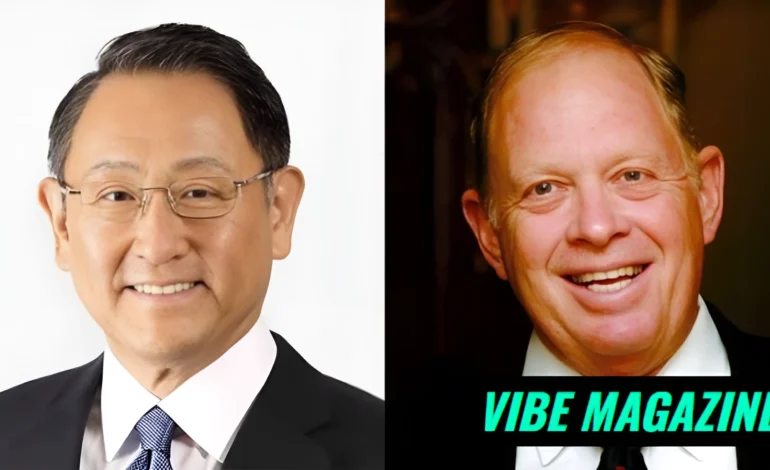

The search for Richard Peery and Akio Toyoda raises an obvious question: what connects a Silicon Valley real estate developer with the longtime leader of one of the world’s most important automobile manufacturers?
At first, the pairing seems unusual. Richard Peery built his career in commercial real estate, becoming closely associated with the transformation of farmland around Stanford and the emerging technology corridor of Northern California. Akio Toyoda spent his professional life inside Toyota, moving through production, marketing, international operations and corporate leadership before becoming president and later chairman of Toyota Motor Corporation. Their industries are different, their careers developed on opposite sides of the Pacific, and there is no established public evidence that they were business partners, relatives, or close professional associates.
That distinction is important because the two names have increasingly appeared together online, creating the impression that there must be a single story linking them. The available record points somewhere else. Rather than one shared corporate history, Richard Peery and Akio Toyoda represent two very different approaches to building influence in business: one through privately held commercial property and long-term investment, the other through leadership inside a global manufacturing company.
Looking at them side by side is therefore less a story about a hidden relationship and more an examination of two remarkable business careers that happened to become associated in the same search phrase.
Richard Peery’s story is deeply connected to the physical infrastructure of Silicon Valley. Akio Toyoda’s is tied to automobiles, manufacturing, mobility and the evolution of Toyota during a period of enormous change in the global car industry. Their stories intersect mainly at the level of business history: both became influential figures in industries where long-term decisions can shape the environment around them for decades.
Quick Facts About Richard Peery and Akio Toyoda
| Fact | Details |
|---|---|
| Full Name | Richard Peery / Akio Toyoda |
| Date of Birth | Richard Peery: 1938 or 1939 / Akio Toyoda: May 3, 1956 |
| Place of Birth | Richard Peery: United States / Akio Toyoda: Nagoya, Japan |
| Nationality | American / Japanese |
| Profession | Real estate developer and investor / Automotive executive and corporate leader |
| Known For | Building Peery-Arrillaga and developing major Silicon Valley commercial properties / Leading Toyota as president and later serving as chairman |
| Years Active | Primarily from the 1960s onward / Joined Toyota in 1984 and continues in a senior leadership role |
| Net Worth | Forbes estimated Richard Peery’s real-time net worth at about $3.5 billion in September 2026 / Akio Toyoda’s personal net worth is not reliably established in a comparable public figure |
| Marital Status | Married / Married |
| Spouse | Mimi Peery / Publicly maintained a comparatively private family life |
| Children | Richard Peery and Mimi Peery have four children / Toyoda has two children |
| Notable Achievements | Helped transform Silicon Valley farmland into major commercial office developments and built substantial real estate wealth / Served as Toyota president from 2009 to 2023 and became chairman in 2023 |
Richard Peery’s current wealth estimate is a moving figure rather than a fixed fact because much of his wealth is tied to private real estate holdings and valuations. Forbes listed him at approximately $3.5 billion in September 2026. Akio Toyoda, by contrast, is best understood through his corporate position and long career rather than a publicly comparable personal-wealth estimate.
Who Is Richard Peery?
Richard Peery is an American real estate developer whose career became intertwined with the rise of Silicon Valley. Unlike technology entrepreneurs whose names became famous through software, hardware or internet companies, Peery operated in a different part of the ecosystem: the land and buildings required by those companies to grow.
His name is closely associated with Peery-Arrillaga, the real estate partnership he built with John Arrillaga. The pair began acquiring land in the Santa Clara Valley during the 1960s, when the region still looked dramatically different from the technology center it would eventually become. Their strategy was based on a straightforward but consequential idea: technology companies would need modern office space, and the right land could become extremely valuable as business activity moved into the area.
That sounds obvious in retrospect.
It was anything but obvious at the time.
The Santa Clara Valley was famous for agriculture, orchards and canneries. The transformation into what became known worldwide as Silicon Valley happened gradually. Companies arrived, technology employment expanded, infrastructure developed and land values changed. Peery and Arrillaga positioned themselves around that transformation by developing office properties rather than trying to become technology entrepreneurs themselves.
Their buildings eventually housed major technology companies, including Google, Apple, Intel and other major businesses. Stanford’s account of Arrillaga’s career describes Peery and Arrillaga as important participants in the transition from the agricultural Santa Clara Valley into the technology-oriented region recognized today.
The Partnership That Defined Peery’s Career
Richard Peery’s professional identity cannot really be separated from John Arrillaga.
The two formed their partnership during the 1960s and developed a distinctive approach to commercial real estate. Rather than relying heavily on debt or pursuing flashy public profiles, they built a portfolio of office properties around the expanding technology industry.
Their strategy was remarkably patient.
They were not trying to predict which individual technology company would dominate the next decade. Instead, they were betting on the broader need for business space in a region where technology companies were increasingly concentrating.
That difference is important.
A technology investor may need to choose a winning company. A commercial developer can sometimes benefit from the growth of an entire ecosystem. If dozens of companies need offices, laboratories, parking facilities and campuses, the underlying real estate can benefit regardless of which individual company becomes the next giant.
This model helped Peery and Arrillaga become major commercial landlords in Silicon Valley. Stanford has described their company as one of the region’s largest commercial real estate developers, with office space leased to companies including Intel, Apple, Facebook and Google.
Richard Peery’s Early Background
Peery’s connection to business began within his family.
His father, Taylor Peery, had a career in banking and real estate, and the younger Peery eventually became involved in managing his father’s property portfolio. Richard studied at Brigham Young University and also attended Stanford’s business school before leaving the MBA program. Forbes describes him as having gained early experience through his father’s property interests before building his own career.
That background gave him something that would become important later: familiarity with property as a long-term investment.
Peery was not entering real estate as someone discovering the industry for the first time. He had already seen how property could be acquired, managed and held over time.
His eventual partnership with Arrillaga placed that experience inside one of the most important economic transformations in modern American history.
From Orchards to Office Parks
One of the most interesting parts of Richard Peery’s story is the physical change in the land around him.
The Silicon Valley of today is associated with headquarters, research centers, venture capital, startups and technology campuses. But much of the region once consisted of agricultural land.
Peery and Arrillaga recognized that the economic value of the region was changing.
Instead of simply watching the technology industry develop, they built part of the environment that allowed it to expand.
The office parks they developed became workplaces for companies that would eventually become some of the most recognizable names in technology. In that sense, Peery’s influence was indirect but substantial. He was not writing software or designing computer processors, but he was helping provide the physical infrastructure where those companies could operate.
This is one reason his career remains important to understanding Silicon Valley.
Technology history is often told through founders and engineers. Real estate developers, landlords, construction companies and infrastructure providers receive less attention even though the technology economy could not have grown without them.
Peery belongs to that less visible side of the story.
A Private Approach to Business
Richard Peery’s public profile has generally been much quieter than that of technology billionaires.
He and Arrillaga were known for maintaining a relatively low-key business operation. Their approach emphasized ownership, long-term property value and conservative financial management rather than building highly public corporate brands around themselves.
That privacy makes Peery somewhat unusual among modern billionaires.
His wealth came from assets that most people see without necessarily knowing who owns them. Office buildings are not like smartphones or social-media platforms. A consumer can use a technology product every day without ever thinking about the property developer behind the company’s headquarters.
Yet the financial impact of commercial real estate can be enormous.
For Peery, the physical building became the business.
The Peery-Arrillaga Portfolio
The scale of Peery and Arrillaga’s real estate activities eventually became substantial enough to attract major technology tenants.
Their properties were connected with companies such as Google and Intuit, while other accounts of their portfolio have highlighted relationships with major Silicon Valley technology firms.
In 2006, Peery and Arrillaga sold a large portion of their holdings for approximately $1.1 billion. The transaction demonstrated the scale of the portfolio they had built over decades.
The sale did not erase Peery’s connection to real estate.
Instead, it illustrated the long-term nature of the strategy. Land acquired and developed decades earlier had become extraordinarily valuable because the surrounding economy had changed so dramatically.
That is perhaps the central theme of Peery’s career: patience.
Richard Peery Beyond Real Estate
Peery’s influence has not been limited to property development.
He has also been involved in philanthropy, including through the Peery Foundation. His family has supported educational and social initiatives, while the Peery name has also been associated with programs at Brigham Young University.
The Peery Institute of Financial Services at BYU was established with major support from the Peery family, reflecting the family’s interest in education and finance.
This side of Peery’s life provides a useful counterpoint to his business career.
The same long-term mindset that shaped his investments also appears in the way his family approached philanthropy: support institutions and programs that can continue producing benefits beyond a single transaction.
For readers wanting broader business and lifestyle stories surrounding influential people and organizations, Vibe Magazine provides another context in which business, culture and public figures can be explored.
Who Is Akio Toyoda?
Akio Toyoda represents a completely different kind of business story.
Born on May 3, 1956, in Japan, Toyoda joined Toyota Motor Corporation in 1984 after studying law at Keio University and earning a master’s degree in business administration from Babson College in the United States. His career inside Toyota included work across multiple parts of the automotive business, both in Japan and internationally.
He was not simply placed into one executive position and left there.
Toyoda moved through production, marketing, product development, international operations and management. He also spent time at New United Motor Manufacturing, Inc., the Toyota-General Motors joint venture in California known as NUMMI.
That experience exposed him to a very different business culture and gave him first-hand experience outside Japan.
Over the following years, Toyoda assumed increasingly senior positions within Toyota. He joined the company’s board in 2000, became managing director in 2002, moved into senior leadership in 2003 and became executive vice president in 2005. In June 2009, he became president of Toyota Motor Corporation.
Toyoda’s Rise to the Toyota Presidency
Akio Toyoda became Toyota’s president at a difficult point in the company’s history and in the global economy.
The global financial crisis had created severe pressure on automakers, while Toyota was also dealing with a major safety and recall crisis involving millions of vehicles.
Toyoda’s leadership during that period became one of the defining chapters of his career.
In 2010, he appeared before the U.S. House Committee on Oversight and Government Reform to address questions surrounding Toyota’s safety problems. In prepared testimony, he emphasized his responsibility for the company and its commitment to vehicle safety and customer confidence.
The episode placed Toyoda in an unusually public position.
Japanese corporate leadership traditionally carried different expectations from American political and media culture, and Toyoda suddenly had to address a global audience that wanted clear explanations from the head of one of the world’s largest car companies.
The crisis became a major test of Toyota’s leadership.
The Toyota Career Was Broader Than the CEO Role
Toyoda’s career is especially notable because he worked across different areas of Toyota before becoming its president.
His experience included production, marketing, product development and international operations. At NUMMI in California, he was exposed to Toyota’s manufacturing methods in a joint venture with General Motors.
He also became associated with Toyota’s digital initiatives through Gazoo, a project that developed into a significant part of the company’s digital and automotive ecosystem.
This breadth mattered because running an automaker is fundamentally different from running a single-product technology company.
A major automaker operates manufacturing plants, supply chains, dealerships, financing operations, research facilities and global distribution networks. Decisions made at the top can affect hundreds of thousands of employees and thousands of suppliers.
Toyoda’s long progression through the company gave him experience across several of those areas before he became president.
Akio Toyoda and the Importance of Cars
One of the more unusual aspects of Toyoda’s public identity is his personal relationship with driving and motorsport.
He has participated in motorsports under the name Morizo, a persona that became closely associated with his enthusiasm for performance driving.
Toyota has presented motorsports as more than entertainment under Toyoda’s leadership. The company has described racing as a place where engineers, drivers and teams can test technologies, develop people and improve vehicles.
Toyoda’s involvement helped make that philosophy part of his public identity.
This is another area where his career differs sharply from Richard Peery’s.
Peery’s professional success came through property, leases, land and investment. Toyoda’s came through manufacturing, products, engineering, corporate management and mobility.
Yet both careers demonstrate the importance of understanding the underlying industry rather than simply occupying a senior title.
Toyoda Becomes Chairman
Akio Toyoda remained Toyota’s president until 2023.
In April of that year, he moved into the role of chairman of Toyota Motor Corporation’s board, while Koji Sato became president and chief executive officer. Toyota’s current executive information continues to list Toyoda as chairman and representative director.
That distinction is important when reading older articles about Toyoda.
Many publications still describe him primarily as Toyota’s president because that was his most prominent role for almost fourteen years.
But the current corporate structure is different.
Toyoda is chairman, not Toyota’s current president and CEO.
His continued role means that his influence within the company did not simply disappear when he left the presidency. Instead, his responsibilities shifted from direct executive leadership toward board-level leadership.
A Major Recognition in 2026
Toyoda’s long career received another major recognition in September 2026, when he was inducted into the Automotive Hall of Fame in Detroit.
The honor recognized his contribution to the global automotive and mobility industry and added another major distinction to a career that had already included decades at Toyota.
The timing is significant because Toyoda’s career now stretches across several different eras of the automotive industry.
He joined Toyota in the 1980s, became president during the global financial crisis, led the company through major changes in the automotive sector and then moved into the chairman’s position as the industry entered another period of technological transformation.
His career therefore provides a useful lens through which to examine the changing automobile industry itself.
So What Connects Richard Peery and Akio Toyoda?
This is the question at the heart of the entire search.
The available public record does not establish a significant direct business relationship between Richard Peery and Akio Toyoda.
There is no established evidence that Peery worked for Toyota, that Toyoda worked with Peery’s real estate business, or that the two built a documented partnership.
Their professional histories are fundamentally separate.
Peery’s major business relationship was with John Arrillaga and centered on Silicon Valley commercial real estate. Toyoda’s defining professional relationship is with Toyota Motor Corporation and the global automotive industry.
That makes the paired keyword unusual.
Instead of uncovering a hidden collaboration, research leads to two separate biographies.
Why Their Names May Be Appearing Together
The most defensible explanation is that online interest has grouped two prominent business figures into the same discussion because they represent different versions of long-term business success.
Recent online pages have specifically begun treating Richard Peery and Akio Toyoda as a paired topic, often describing them as two successful figures from different industries. However, those pages do not establish a documented partnership or personal relationship between them.
That distinction matters.
A repeated search association is not proof of a professional relationship.
Search queries can emerge because readers are comparing two people, because multiple articles use the same phrasing, or because an online content ecosystem begins linking the names together.
The responsible conclusion is therefore simple: Richard Peery and Akio Toyoda have separate documented careers, and no substantial direct connection between them has been established in the public record reviewed for this article.
Two Different Industries, One Similar Theme
Although Peery and Toyoda are not directly connected, comparing their careers can still reveal an interesting common theme: both benefited from thinking beyond the immediate moment.
Peery’s major real estate decisions were made before Silicon Valley had become synonymous with technology.
Toyoda’s career unfolded across decades in which the automobile industry repeatedly changed through globalization, manufacturing advances, environmental pressures, software, electrification and shifting consumer expectations.
Neither career can be understood simply through one year or one decision.
Peery’s wealth came from properties that appreciated over long periods as the surrounding economy developed.
Toyoda’s influence came from decades of experience inside an organization whose operations span multiple continents and industries.
The timescale is different, but the underlying lesson is similar.
Large businesses often reward people who understand where an industry is going rather than simply where it is today.
Silicon Valley Real Estate Versus Global Automotive Manufacturing
The contrast becomes even clearer when the two industries are placed next to each other.
Commercial real estate is fundamentally about location, demand, financing, tenants, property development and long-term asset value. Peery’s success came from identifying where economic growth was likely to create demand for office space and then developing properties accordingly.
Automotive manufacturing is a far more complex industrial system. It involves design, engineering, factories, suppliers, logistics, dealerships, financing, regulation and consumer demand across many countries.
Toyoda’s career required him to navigate that complexity from inside one of the world’s largest automobile companies.
Peery operated primarily through assets.
Toyoda operated through an enormous organization.
One’s most important decisions could involve land and buildings.
The other’s could involve vehicle platforms, manufacturing systems, international operations and corporate strategy.
The difference explains why placing their careers side by side is more useful as a comparison than as a claim of personal connection.
What Readers Should Not Assume
Because the two names appear together, several assumptions would be easy to make but are not supported by the available evidence.
Richard Peery should not be described as a Toyota executive.
Akio Toyoda should not be described as a partner in Peery-Arrillaga.
There is no established basis for saying that Peery and Toyoda are relatives.
There is also no reason to suggest that they jointly built a business or attended a major undisclosed business event together.
Their connection is primarily a modern informational association rather than a documented personal relationship.
That clarification is perhaps the most important part of understanding the keyword.
Richard Peery’s Influence on Silicon Valley’s Physical Landscape
One of the reasons Peery remains an important business figure is that his influence can be understood physically.
Walk through Silicon Valley and it is easy to focus on the companies occupying office buildings rather than the people who developed the buildings themselves.
But technology requires physical space.
Companies need offices, campuses, research facilities, parking, infrastructure and locations that can accommodate large workforces.
Peery and Arrillaga built around that need.
Their strategy was especially effective because they entered the market during an earlier phase of Silicon Valley’s development. They were not buying into a fully mature global technology district. They were participating in the process that helped create its commercial landscape.
That is why descriptions of Peery’s career often place him alongside the broader history of Silicon Valley.
He was not a technology founder.
He was part of the infrastructure that allowed technology companies to expand.
Akio Toyoda’s Influence on the Automotive Industry
Toyoda’s influence operates on a much larger corporate scale.
Toyota sells vehicles around the world and maintains a vast network of manufacturing, suppliers and dealerships. Leading the company therefore requires decisions that affect not only Toyota employees but also a huge ecosystem surrounding the company.
During Toyoda’s presidency, Toyota dealt with major safety issues, changing consumer expectations, new mobility technologies and the industry’s increasing debate over electrification and alternative powertrains.
Toyoda also placed significant emphasis on vehicle development and motorsport.
His public identity as Morizo reflected his belief that executives should remain connected to the product itself.
That approach is unusual for a corporate chairman of a company of Toyota’s size.
It helped create a public image of Toyoda as someone who viewed automobiles not simply as products but as machines that should be understood and experienced.
The Family Businesses Behind Both Stories
Family history is another area where the two biographies differ.
Richard Peery inherited exposure to business through his father, Taylor Peery, whose career included banking and real estate. Richard later developed his own professional identity in commercial property.
Akio Toyoda was born into the family that founded and developed Toyota. His grandfather was Kiichiro Toyoda, founder of Toyota Motor Corporation, and his father, Shoichiro Toyoda, also became a major Toyota leader.
That means both men grew up with strong business legacies around them, but the nature of those legacies was different.
Peery’s family background gave him exposure to finance and property.
Toyoda’s gave him a direct connection to an industrial manufacturing dynasty.
Neither fact alone explains his eventual career.
Both still had to operate within their respective industries and build their own professional records.
The Importance of Long-Term Thinking
Perhaps the strongest reason these two names work as a comparative subject is that both careers are difficult to understand through short-term thinking.
Peery’s real estate strategy required holding land and properties while the surrounding region developed.
Toyoda’s career inside Toyota lasted for decades and took him through multiple levels of management before he became president.
Neither story is about an overnight success.
That is particularly interesting in an era when business stories are often presented through rapid growth, startup launches and sudden wealth.
Real estate and automotive manufacturing work differently.
They are capital-intensive industries.
They require planning.
They require patience.
They involve assets and systems that can take years to build.
The careers of Peery and Toyoda demonstrate how influence can accumulate gradually.
The Difference Between Wealth and Corporate Power
Richard Peery and Akio Toyoda also illustrate two different meanings of business power.
Peery’s wealth is closely connected to ownership of private assets.
The value of those assets contributes directly to his personal financial position.
Toyoda’s influence is different.
As chairman of Toyota, his importance comes from his position within a global corporation rather than from being the sole owner of the company.
Toyota is a publicly traded corporation with shareholders, a board and a large executive structure.
That means Toyoda’s corporate authority and his personal wealth should not be confused.
A person can be extremely influential within a company without personally owning the company.
Peery’s story is more closely tied to private ownership and real estate wealth.
Toyoda’s is more closely tied to corporate leadership and family heritage within a major public company.
Why the Comparison Remains Interesting
Even without a direct relationship, Richard Peery and Akio Toyoda make an interesting pair because their careers reveal two very different paths to becoming influential business figures.
Peery built value around a changing geographic economy.
Toyoda led within a changing industrial economy.
Peery’s most important business decisions involved land and office space.
Toyoda’s involved automobiles, manufacturing and mobility.
Peery’s career became closely associated with the growth of Silicon Valley.
Toyoda’s became closely associated with Toyota’s global evolution.
The common thread is not a shared company.
It is the scale and duration of their professional impact.
Frequently Asked Questions About Richard Peery and Akio Toyoda
Who is Richard Peery?
Richard Peery is an American real estate developer best known for his long partnership with John Arrillaga and their development of commercial properties in Silicon Valley. The pair acquired and developed land during the region’s transition from an agricultural economy into one of the world’s major technology centers. Their properties eventually housed major technology companies, and Peery became a billionaire through his long-term involvement in commercial real estate.
Who is Akio Toyoda?
Akio Toyoda is a Japanese business executive and chairman of Toyota Motor Corporation. He joined Toyota in 1984 and held a succession of positions across production, marketing, product development and international operations before becoming president in 2009. He moved from the presidency to the chairmanship in April 2023.
Are Richard Peery and Akio Toyoda related?
There is no established public evidence that Richard Peery and Akio Toyoda are related. Their family histories are separate. Peery comes from an American family with a background in banking and real estate, while Toyoda belongs to the family associated with the founding and leadership of Toyota.
Did Richard Peery work for Toyota?
There is no reliable evidence establishing Richard Peery as a Toyota employee or executive. His documented professional career is centered on commercial real estate, particularly through his work with John Arrillaga and Peery-Arrillaga.
Did Akio Toyoda work with Richard Peery?
No substantial documented professional relationship between the two has been established. Toyoda’s career is centered on Toyota and the global automotive industry, while Peery’s career is centered on Silicon Valley real estate.
Why are Richard Peery and Akio Toyoda mentioned together?
The two names have recently been paired in online articles and searches, apparently because readers are interested in comparing two prominent business figures from very different industries. The available evidence does not establish a major direct relationship between them.
What company did Richard Peery build with John Arrillaga?
Peery and Arrillaga developed the Peery-Arrillaga real estate business. Their work involved acquiring land and developing office properties in Silicon Valley, eventually creating a substantial portfolio associated with major technology tenants.
What is Akio Toyoda’s current role?
Akio Toyoda is chairman of the board and representative director of Toyota Motor Corporation. He became chairman in April 2023 after stepping down as president. Toyota’s executive listings identify Koji Sato as president while Toyoda serves as chairman.
Was Akio Toyoda always a corporate executive?
No. His Toyota career involved a wide range of responsibilities before he reached the top leadership positions. He worked in areas including production, marketing, product development and international operations. He also served at NUMMI, Toyota’s joint venture with General Motors in California, giving him experience outside Japan.
What is Richard Peery known for besides real estate?
Peery is also associated with philanthropy and education. The Peery family has supported programs at Brigham Young University, including the Peery Institute of Financial Services, and Richard Peery has been involved in philanthropic activity through the Peery Foundation.
What is Akio Toyoda’s connection to motorsports?
Toyoda has participated in motorsport under the name Morizo and has promoted motorsports as a way to develop people and vehicles. Toyota has connected his driving activities with the company’s broader interest in improving vehicles through competition and hands-on experience.
Is Richard Peery a technology entrepreneur?
Not in the conventional sense. His career is primarily in commercial real estate. His importance to Silicon Valley comes from developing physical office properties used by technology companies rather than founding a major technology company himself.
Is Akio Toyoda the CEO of Toyota?
No. Akio Toyoda stepped down as president and CEO in 2023 and became chairman. Koji Sato succeeded him as Toyota’s president. Toyoda remains chairman of the board.
What major recognition did Akio Toyoda receive in 2026?
In September 2026, Toyoda was inducted into the Automotive Hall of Fame in Detroit. The recognition highlighted his long-term contribution to the global automotive and mobility industry.
What is the biggest difference between Richard Peery and Akio Toyoda?
Their industries and forms of influence are fundamentally different. Peery built wealth through commercial real estate and became associated with the physical development of Silicon Valley, while Toyoda built a decades-long corporate career inside Toyota and became one of the most recognizable leaders in the global automotive industry.
Richard Peery and Akio Toyoda in Perspective
The most useful way to understand Richard Peery and Akio Toyoda is not to search for a connection that the public record does not establish.
Their separate careers tell a more interesting story.
Richard Peery represents the infrastructure side of Silicon Valley’s rise. His partnership with John Arrillaga turned farmland into office developments that became part of the physical environment surrounding major technology companies. His career shows how an investor can benefit from understanding where an economy is moving long before the transformation becomes obvious to everyone else.
Akio Toyoda represents a different kind of long-term business leadership. His career inside Toyota took him from operational and international responsibilities to the presidency and eventually the chairmanship of one of the world’s most important automakers. His professional life has been shaped by manufacturing, engineering, mobility, corporate management and the challenges of running a global industrial company.
There is no need to manufacture a partnership between them to make the subject worthwhile.
In fact, the absence of a documented direct relationship is one of the most important facts about the keyword.
Peery and Toyoda demonstrate two very different ways that business leaders can become influential. One built around land, buildings and the physical growth of a technology region. The other built a career inside a global automotive organization whose products and operations reach markets around the world.
Their stories belong to different industries, different countries and different corporate structures.
Yet both demonstrate the power of thinking in decades rather than months.
That may be the most meaningful connection between Richard Peery and Akio Toyoda: not a shared company, not a hidden partnership, and not a family relationship, but two independent careers shaped by long-term decisions that continued to matter long after those decisions were first made.
For More Visits: Vibemagazine