




Hiroshi Mikitani and Henrik Fisker Compared
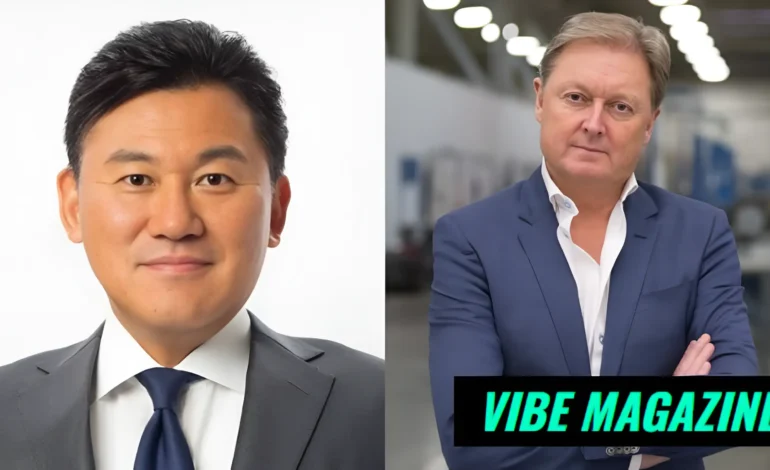

What happens when two entrepreneurs build international reputations in industries that seem almost impossible to compare? One creates a vast digital commerce and technology business from Japan, while the other becomes known for shaping the look of some of the world’s most recognizable automobiles before turning his attention to electric vehicles. That contrast helps explain why Hiroshi Mikitani and Henrik Fisker can appear together in discussions about entrepreneurship, innovation, branding, and business ambition even though their careers have followed very different roads.
Hiroshi Mikitani built his reputation around Rakuten, transforming an early online marketplace into a broad technology and services group with interests reaching far beyond retail. Henrik Fisker, meanwhile, established himself first through automotive design and later pursued the much harder task of creating automobile companies of his own. Their stories belong to different industries, but both illustrate a recurring entrepreneurial challenge: having an idea is one thing; building an organization capable of carrying that idea into the wider world is something else entirely.
| Fact | Hiroshi Mikitani | Henrik Fisker |
|---|---|---|
| Full Name | Hiroshi Mikitani | Henrik Fisker |
| Date of Birth | August 11, 1965 | August 10, 1963 |
| Place of Birth | Kobe, Hyogo, Japan | Allerød, Denmark |
| Nationality | Japanese | Danish |
| Profession | Entrepreneur, business executive, technology investor | Automotive designer, entrepreneur |
| Famous Role / Known For | Founder and chairman of Rakuten | Automotive designer and founder associated with Fisker automotive ventures |
| Years Active | Since the early 1990s | Since the 1980s |
| Net Worth | Estimated in the billionaire range, although private wealth estimates vary | Private wealth is not reliably established as a single current figure |
| Marital Status | Married | Married |
| Spouse | Haruko Mikitani | Geeta Gupta-Fisker |
| Children | Has children | Has children |
| Notable Works / Achievements | Founded Rakuten and developed it into an international technology and commerce group | Designed influential automobiles and founded automotive ventures focused on design and electric mobility |
Why These Two Names Can Lead to the Same Conversation
At first glance, there is little reason to put a Japanese technology entrepreneur and a Danish automotive designer in the same paragraph. Mikitani’s world is built around marketplaces, digital services, telecommunications, financial technology, travel, media, and global internet businesses. Fisker’s professional identity emerged from studios, vehicle proportions, materials, engineering constraints, manufacturing, and the emotional relationship between drivers and automobiles.
There is no need to invent a partnership between them to make the comparison worthwhile.
The connection is conceptual. Both demonstrate how an individual can attempt to move beyond a single professional role and build something much larger around a personal vision. Mikitani moved from finance into technology entrepreneurship and eventually became the public face of a multinational business ecosystem. Fisker moved from designing vehicles for established manufacturers to taking responsibility for complete automotive ventures.
That transition matters. Designers and founders occupy different positions inside a company. A designer can influence what a product looks and feels like, while an entrepreneur has to consider financing, employees, operations, distribution, customers, competition, regulation, and long-term survival.
The careers of Hiroshi Mikitani and Henrik Fisker therefore offer two different perspectives on the same broad question: how does an individual turn a distinctive idea into an international business identity?
Two Entrepreneurs, Two Very Different Starting Points
The professional foundations of these men could hardly be more different.
Mikitani’s early career developed in Japan’s financial sector. After studying at Hitotsubashi University, he joined the Industrial Bank of Japan. His experience in finance gave him exposure to business structures and economic decision-making, but his entrepreneurial direction changed significantly after the 1995 Kobe earthquake.
The disaster affected Mikitani personally and professionally. It also contributed to his thinking about entrepreneurship and the role businesses could play in rebuilding economic activity. A few years later, he launched what would become Rakuten.
Fisker grew up in Denmark and developed an early fascination with cars. His path was more directly connected to industrial and transportation design. He studied at the Art Center College of Design in Pasadena, California, an institution known for its connection to automotive and transportation design.
His career placed him inside major automobile companies and design studios before he began creating vehicles under his own name.
The difference is important. Mikitani entered entrepreneurship from finance and business. Fisker entered it after developing a reputation for product design.
One started by building a platform.
The other became known for designing the product itself.
Hiroshi Mikitani and the Rise of Rakuten
Any serious Hiroshi Mikitani biography eventually leads to Rakuten, but simply describing Rakuten as an online marketplace misses the significance of Mikitani’s entrepreneurial strategy.
When Rakuten was established in 1997, Japanese internet commerce was still developing. The company began as an online shopping marketplace with a relatively small number of merchants. Mikitani’s idea was not simply to sell products himself. Instead, Rakuten created a platform through which merchants could reach customers online.
That distinction became central to the company’s development.
The marketplace model allowed Rakuten to build a relationship between merchants and consumers rather than operating purely as a traditional retailer. Over time, the company expanded its ecosystem through loyalty programs, financial services, travel, digital content, communications, and other technology-related businesses.
Mikitani’s career consequently became much bigger than the original concept of an online shopping website.
His approach has often emphasized creating a broad membership ecosystem in which customers can interact with multiple Rakuten services. The company’s famous points-based loyalty structure became an important part of that model.
For Mikitani, technology was not an isolated product category. It could serve as infrastructure connecting different aspects of everyday commercial life.
What Made Mikitani’s Business Model Different?
The interesting feature of Mikitani’s career is the willingness to think beyond a single product.
A conventional retailer might concentrate on merchandise. A technology company might focus on software. A financial company might focus on banking or payments. Rakuten developed across several of these categories.
That expansion created both opportunity and complexity.
Building multiple businesses under one corporate umbrella can produce valuable connections between services, but it also requires careful management. Each industry has its own competitors, regulations, customers, and operating requirements.
Mikitani’s role evolved accordingly. He was not simply the founder of an internet marketplace. He became a Japanese business leader responsible for an increasingly international technology organization.
His international ambitions were particularly notable.
Rakuten expanded through acquisitions, partnerships, investments, and the development of services outside Japan. The company became involved in markets including communications, financial technology, travel, digital content, and sports.
Mikitani also became known for his interest in making Rakuten more globally oriented. English-language communication within the company became a particularly visible part of that effort.
The broader lesson from the Hiroshi Mikitani career is that entrepreneurship can involve continually redefining the boundaries of the original company.
The Entrepreneurial Mindset Behind Rakuten
Mikitani’s story is not simply about launching a successful company. It is about the consequences of thinking of a company as an ecosystem.
The internet marketplace gave Rakuten a starting point, but the long-term business strategy depended on customer relationships extending across multiple services.
That model requires a different kind of leadership from managing a single-purpose company.
The founder has to understand how different business units can support one another while still maintaining their own identities. It also means accepting that some expansion decisions may take years before their strategic value becomes clear.
This is one reason Mikitani remains an interesting figure in discussions about technology entrepreneurship. His career demonstrates the difference between creating a product and building an organization around a commercial network.
Readers interested in broader technology and business stories can find additional entrepreneurial profiles and company-focused features through Vibe Magazine.
Henrik Fisker: Where Design Meets the Automobile
Henrik Fisker’s career began with a question that is familiar to designers but difficult for businesses to answer: what should the future of the automobile look like?
Before becoming an entrepreneur, Fisker developed a reputation as an automotive designer. His work included influential vehicles created during periods at major automobile manufacturers.
Among the best-known designs associated with his career are the BMW Z8 and the Aston Martin DB9. His involvement with major design programs helped establish his reputation within the automotive industry.
The significance of those vehicles was not simply their commercial presence. They demonstrated Fisker’s ability to work with proportions, surfaces, visual identity, and the emotional character of a vehicle.
Automotive design is unusually demanding because a car has to satisfy many competing requirements.
It must be attractive, but it also has to accommodate passengers.
It has to look distinctive, but it must remain practical to manufacture.
It needs aerodynamic considerations, safety requirements, engineering systems, regulations, and cost targets.
A designer therefore operates within constraints that are much more complex than simply drawing an attractive object.
Fisker’s professional identity developed within that tension.
From Designer to Founder
The transition from automotive designer to automotive entrepreneur was a major change in responsibility.
Designing a car for an established manufacturer means working within an organization that already has factories, suppliers, financial resources, sales networks, engineering teams, and established customers.
Creating an automobile company from scratch is entirely different.
Fisker took that step with Fisker Automotive, the company behind the Fisker Karma. The Karma was a luxury plug-in hybrid that attracted attention for its distinctive styling and alternative powertrain.
The vehicle represented an important part of Fisker’s evolution from designer to founder.
He was no longer simply proposing what a vehicle could look like. He was attempting to create an entire company around a particular vision of automotive technology and design.
That ambition came with enormous challenges.
Automobile manufacturing is capital intensive. Supply chains are complicated, regulatory requirements are extensive, and production problems can quickly become financially serious. A beautiful vehicle does not automatically translate into a sustainable automobile company.
Fisker’s career illustrates that distinction vividly.
Fisker, Electric Mobility, and a New Business Chapter
Henrik Fisker’s interest in electrification later became central to another chapter of his career.
Fisker Inc. was established with the ambition of creating electric vehicles around a design-led identity. The company’s most visible product became the Fisker Ocean, an electric SUV intended to combine distinctive styling with modern electric-vehicle technology.
The Ocean represented a different automotive moment from the Karma.
Electric vehicles had moved from a niche technological conversation toward mainstream competition involving established manufacturers and newer companies. Consumers had more choices, while investors and manufacturers were paying much greater attention to battery technology, software, charging infrastructure, production economics, and sustainability.
For Fisker, the challenge remained familiar: create a vehicle that could stand apart visually while turning the design vision into a viable commercial product.
The company encountered major difficulties, including financial pressure and challenges surrounding production, deliveries, and business sustainability. Fisker Inc. ultimately entered bankruptcy proceedings in 2024.
That part of the story should not be ignored when discussing the Henrik Fisker career.
Entrepreneurship is often presented through successful launches and impressive products, but automotive entrepreneurship exposes the risks more dramatically than many other industries. A founder can have design credibility, industry experience, and a compelling product concept while still facing problems that threaten the entire business.
The Designer Behind the Brand
Fisker’s name is closely associated with automotive design, but his entrepreneurial career demonstrates how difficult it can be to transfer personal creative reputation into a scalable company.
Design creates recognition.
Business has to create continuity.
A designer can become associated with a distinctive aesthetic. A company must develop manufacturing capabilities, distribution systems, financial discipline, customer support, and organizational resilience.
This distinction makes Fisker’s story particularly useful for understanding entrepreneurship and innovation.
His career is not simply a biography of an automotive designer. It is a case study in what happens when a creative professional takes responsibility for an entire commercial enterprise.
Readers looking for more automotive stories can explore related subjects and profiles on Vibe Magazine.
From Digital Commerce to Automotive Design
At the center of the comparison between Hiroshi Mikitani and Henrik Fisker is a basic difference in what they build.
Mikitani’s most important creation is an ecosystem.
Fisker’s professional legacy is strongly connected to physical products and the visual language of automobiles.
One operates through networks of merchants, consumers, services, data, communications, finance, and technology. The other works with machines that have to be designed, engineered, manufactured, transported, sold, serviced, and regulated.
Their businesses therefore face very different types of risk.
A digital marketplace can expand to additional users without building another physical object for every transaction. An automobile company has to produce an actual vehicle for every customer.
That difference affects everything from capital requirements to supply chains.
Yet both careers demonstrate the importance of product identity.
Rakuten developed a recognizable corporate identity and customer ecosystem. Fisker developed a recognizable design identity centered on automobiles.
In both cases, branding became closely associated with the founder’s public reputation.
Industry Is Not a Detail — It Changes the Entrepreneurial Equation
Technology entrepreneurship often rewards speed, scalability, network effects, and the ability to connect large numbers of users.
Automotive entrepreneurship is more constrained by physical production.
A software service can potentially reach millions of users without constructing a new factory for each market. A vehicle requires materials, factories, components, transportation, certification, service infrastructure, and physical inventory.
This is why comparing Mikitani and Fisker only through the word “innovation” would be too shallow.
Innovation means something different in their respective fields.
For Mikitani, innovation has included new ways of connecting commerce and services through technology.
For Fisker, innovation has often involved design, mobility, electrification, and the relationship between a vehicle’s visual character and its technical architecture.
The shared theme is ambition, but the mechanisms are different.
The Business Ideas Behind Their Public Careers
Entrepreneurial identity is rarely created by one decision.
Mikitani’s career shows the importance of ecosystem thinking. Fisker’s shows the tension between creative control and operational complexity.
Both also demonstrate the importance of branding.
Mikitani became inseparable from the Rakuten story. The founder’s identity became part of the company’s international narrative.
Fisker’s surname became a recognizable automotive brand.
This can be an advantage because customers and media can quickly connect a company with a particular vision. It can also create additional pressure because the founder’s reputation becomes closely tied to the performance of the business.
Risk Looks Different in Different Industries
Risk-taking is frequently described as a universal feature of entrepreneurship, but the consequences depend heavily on the industry.
Mikitani’s expansion strategy involved entering different sectors and international markets. Such moves require capital, management attention, and the ability to integrate different businesses.
Fisker’s risks were connected to physical product development and automobile manufacturing. Mistakes could involve engineering, supply chains, production schedules, financing, and regulatory requirements.
Neither type of risk is inherently simple.
The comparison instead shows why entrepreneurs need strategies appropriate to the structures of their industries.
Building a Global Brand
Mikitani and Fisker both developed careers that crossed national borders.
Mikitani’s business ambitions extended beyond Japan. Rakuten’s activities reached multiple international markets and industries, turning the company into a global business rather than a purely domestic internet marketplace.
Fisker’s career was international almost from the beginning. Born in Denmark, educated in the United States, and professionally connected to major automobile manufacturers in Europe and beyond, he developed a career that was inherently global.
Their international experiences were therefore different but significant.
Mikitani’s challenge involved taking a Japanese technology and commerce company outward.
Fisker’s challenge involved establishing an internationally recognizable design and automotive identity.
Global business requires more than translation.
It requires understanding customers, regulations, cultural expectations, partners, employees, and competitive conditions in different markets.
That is one of the more useful lessons found in comparing their careers.
Public Recognition and Major Achievements
Mikitani’s most visible achievement remains the creation and expansion of Rakuten. What began as an online marketplace developed into a diversified group with activities across commerce, financial services, communications, travel, digital services, and other fields.
His career also placed him among Japan’s best-known technology entrepreneurs.
Beyond business, Mikitani has held public-facing leadership roles and participated in discussions concerning technology, entrepreneurship, economic policy, and Japan’s international competitiveness.
Fisker’s recognition comes from a different source.
His standing in the automotive world was built substantially through design work. The BMW Z8 and Aston Martin DB9 remain particularly recognizable examples associated with his design career.
His later move into electric-vehicle entrepreneurship expanded his public profile beyond design.
The Fisker Karma and Fisker Ocean represented attempts to turn his design philosophy into complete automotive products under companies carrying his own professional identity.
These achievements should be considered separately. A successful design career does not automatically make an automobile company successful, just as creating a large technology business does not mean every expansion effort produces the same outcome.
Personal Lives Behind Public Careers
Both men have maintained public profiles largely because of their professional activities, although their personal lives have also attracted interest.
Hiroshi Mikitani is married to Haruko Mikitani, and they have children. His public image has remained closely connected to entrepreneurship, Rakuten, technology, and business leadership.
Henrik Fisker is married to Geeta Gupta-Fisker, who has also been involved professionally with Fisker-related business activities. They have children.
For both individuals, the available public narrative is dominated by their careers. There is limited value in speculating about private family dynamics or personal matters that have not been deliberately placed in the public sphere.
That distinction matters because famous entrepreneurs are often treated as though every part of their lives is available for public interpretation.
It is not.
The more meaningful personal story is the professional one: how their interests and ambitions shaped the companies and products with which their names became associated.
Where Their Paths Clearly Diverge
The similarities between Mikitani and Fisker become useful only when their differences remain visible.
Mikitani is fundamentally associated with technology, commerce, corporate expansion, and platform-based business.
Fisker is fundamentally associated with design, automobiles, mobility, and electric vehicles.
Mikitani’s primary company grew by adding services and building relationships across a digital ecosystem.
Fisker’s entrepreneurial ventures depended on developing physical products and attempting to establish automotive manufacturing operations.
Their leadership environments were therefore radically different.
A technology platform can measure users, transactions, engagement, and digital activity at enormous scale. An automotive business must monitor physical production, inventory, components, logistics, warranties, safety, and service.
The comparison becomes stronger when these differences are acknowledged rather than hidden.
What These Two Careers Have in Common
Despite the separation between their industries, several meaningful parallels remain.
Both men attached their identities to ambitious business ideas.
Both pursued international relevance.
Both moved beyond conventional professional roles.
Mikitani did not remain a banker. Fisker did not remain only a designer.
Both became founders and public representatives of businesses associated with their names and visions.
Another similarity is the importance of long-term ambition.
Rakuten grew far beyond its original marketplace concept.
Fisker’s professional journey moved from vehicle design toward complete automotive companies and electric mobility.
In both cases, the founder’s ambition exceeded the original job description.
That is perhaps the most useful reason to examine Hiroshi Mikitani and Henrik Fisker together.
The Entrepreneur as Builder of an Ecosystem or Identity
There are different ways for a founder to become central to a business.
Mikitani’s influence is strongly connected to the construction of an ecosystem. The more services Rakuten added, the more interconnected its customer and merchant relationships became.
Fisker’s influence has often been more closely connected to identity and design. His name evokes a particular interpretation of what an automobile can look like.
One model is network-oriented.
The other is design-oriented.
Neither model automatically guarantees commercial success.
But both demonstrate how founders can become associated with an organizing idea that extends beyond a single product.
Why People Continue Searching for Their Names
The continuing interest in Hiroshi Mikitani and Henrik Fisker reflects the unusual combination of entrepreneurship, technology, design, and international business represented by their careers.
Mikitani remains interesting because Rakuten became one of Japan’s most prominent technology companies and because his business strategy extended into numerous sectors.
Fisker remains interesting because his career crosses two worlds that are often discussed separately: high-level automotive design and startup entrepreneurship.
People searching for an Hiroshi Mikitani biography may be trying to understand how a former banker built a major technology group.
People searching for a Henrik Fisker biography may be interested in how an automotive designer moved from designing famous cars to creating companies of his own.
The combined search phrase raises a different question.
Why place these two people together?
The answer does not require a secret connection. Their names can be studied side by side because they represent two distinct forms of modern entrepreneurial ambition.
A Useful Comparison Without Forcing a Connection
It would be misleading to suggest that Hiroshi Mikitani and Henrik Fisker share a direct business partnership simply because their names appear together in searches or articles.
Their professional histories are separate.
What makes the comparison legitimate is the opportunity to examine how entrepreneurship changes according to industry.
Mikitani’s story centers on digital commerce and the creation of a broad technology ecosystem.
Fisker’s story centers on automotive design and the attempt to build independent vehicle companies.
Mikitani’s experience demonstrates the possibilities of platform expansion and corporate diversification.
Fisker’s experience demonstrates how difficult it can be to translate creative distinction into a sustainable manufacturing business.
Both stories also show why founders need more than a compelling personal vision.
They need organizations.
They need capital.
They need customers.
They need capable teams.
And they need the ability to respond when the original plan encounters conditions that were not visible at the beginning.
For readers interested in wider business stories, entrepreneurial profiles such as these provide a useful way to understand how different industries shape the people who lead them. More related stories can be explored through Vibe Magazine.
The Lasting Significance of Mikitani’s Career
Mikitani’s significance comes from the scale of what Rakuten became and from the decision to treat digital commerce as a foundation for a wider ecosystem.
His career illustrates a particularly Japanese chapter of internet entrepreneurship while also showing how a company from Japan could pursue an international role.
The Rakuten story is therefore about more than online shopping.
It is about how a marketplace can become the starting point for a much broader collection of services.
That expansion changed Mikitani’s role as well. The founder who initially saw an opportunity in internet commerce eventually became responsible for a multinational organization operating across multiple industries.
The Lasting Significance of Fisker’s Career
Fisker’s contribution is most strongly connected to the intersection of design and mobility.
His work helped establish a recognizable visual language within luxury automobile design, while his later companies demonstrated his desire to influence the entire vehicle-making process.
The electric-vehicle chapter of his career also reflects a broader transformation within the automotive industry.
Electric mobility created opportunities for new companies and designers to challenge traditional assumptions about what cars should look like and how they should be marketed.
At the same time, Fisker’s business difficulties demonstrated the formidable barriers facing new automobile manufacturers.
That combination of creative ambition and commercial difficulty is central to understanding his career.
What Entrepreneurs Can Actually Learn From Both
The most useful lesson from comparing these two figures is not that entrepreneurs should copy either one.
Their industries are too different for that.
Instead, their careers illustrate several broader principles.
A founder’s original expertise can become the foundation of something much larger. Mikitani used his understanding of business and finance to enter technology entrepreneurship. Fisker used his design expertise as the foundation for automotive companies.
But expertise alone is insufficient.
As the company grows, the founder’s responsibilities change.
A designer who becomes a manufacturer must understand operations.
A marketplace founder who expands into finance, telecommunications, travel, and other sectors must understand organizational complexity.
The skills that help someone start a company are not always the same skills needed to manage it at scale.
That is one of the most important ideas visible in both careers.
Are They More Similar Than They First Appear?
Only in certain respects.
They are similar as examples of founders who sought international influence and attempted to build businesses around distinctive ideas.
They are very different in professional specialization, industry structure, product type, and entrepreneurial path.
Mikitani’s career is primarily a story of technology, commerce, and corporate ecosystem building.
Fisker’s is primarily a story of design, automobiles, and mobility entrepreneurship.
Trying to make them identical would weaken the comparison.
The interesting part is precisely the contrast.
Frequently Asked Questions
Who are Hiroshi Mikitani and Henrik Fisker?
Hiroshi Mikitani is a Japanese entrepreneur best known for founding Rakuten, which developed from an online marketplace into a diversified technology and services group.
Henrik Fisker is a Danish automotive designer and entrepreneur known for major vehicle designs and for founding automotive companies associated with his name, including ventures focused on electrified vehicles.
Why are Hiroshi Mikitani and Henrik Fisker discussed together?
Their careers are not based on a known direct partnership. They can be discussed together because both represent ambitious approaches to entrepreneurship and international business, although they built their reputations in very different industries.
Mikitani is associated primarily with technology and commerce, while Fisker is associated primarily with automotive design and mobility.
What is Hiroshi Mikitani best known for?
Mikitani is best known as the founder of Rakuten. He helped transform the company from an early Japanese online marketplace into a much broader technology and services organization.
His career is particularly associated with digital commerce, international expansion, loyalty programs, financial services, telecommunications, and the development of a connected business ecosystem.
What is Henrik Fisker best known for?
Henrik Fisker is best known for his work as an automotive designer and entrepreneur.
He has been associated with notable automobile designs, including the BMW Z8 and Aston Martin DB9, and later became known for founding automotive companies that pursued his own design and mobility concepts.
What industry is Hiroshi Mikitani associated with?
Mikitani’s career spans several areas, but technology and digital commerce are at its center.
Through Rakuten, his professional activities have extended into financial services, telecommunications, travel, digital content, sports, and other technology-related fields.
What is Henrik Fisker’s connection to automotive design?
Automotive design is the foundation of Fisker’s professional reputation.
His career began within the automotive design industry, where he worked on vehicles for major manufacturers before establishing independent design and automotive ventures.
His design background remained central even after he became an entrepreneur.
Are Hiroshi Mikitani and Henrik Fisker business partners?
There is no established basis for describing Mikitani and Fisker as business partners. Their careers developed independently in technology and automotive industries respectively.
The fact that their names appear together does not itself establish a professional relationship.
What makes Mikitani’s entrepreneurial story distinctive?
A major feature of Mikitani’s career is the transformation of a relatively focused online marketplace into a broader business ecosystem.
Rather than treating commerce as the company’s only activity, Rakuten expanded into several connected sectors and international markets.
What makes Fisker’s entrepreneurial story distinctive?
Fisker’s career combines creative design expertise with the much more difficult task of building automobile companies.
His transition from designer to founder illustrates the difference between creating a vehicle concept and managing the financial, manufacturing, regulatory, and commercial realities of producing vehicles.
How are their professional backgrounds different?
Mikitani came from a finance and business background before becoming a technology entrepreneur.
Fisker developed his career through automotive and transportation design.
One built a digital commerce ecosystem, while the other developed physical products and automotive companies.
Did Mikitani create Rakuten himself?
Mikitani founded Rakuten in 1997 and became the central figure in its development. Like any large company, Rakuten’s growth involved employees, executives, partners, investors, and many other contributors.
The company’s expansion should therefore be understood as an organizational achievement while recognizing Mikitani’s role as founder and long-term leader.
Did Henrik Fisker only design cars?
No. Design is the foundation of his reputation, but his career expanded into entrepreneurship.
He founded and led automotive ventures, including companies focused on vehicles using alternative and electric powertrain technologies.
What can entrepreneurs learn from their careers?
Their careers demonstrate that a strong professional specialty can become the foundation for a larger entrepreneurial vision, but expanding a business introduces challenges beyond the founder’s original expertise.
Mikitani’s career highlights ecosystem development and international diversification. Fisker’s career highlights the transition from creative leadership into manufacturing-intensive entrepreneurship.
Why is each entrepreneur internationally recognized?
Mikitani became internationally recognized through Rakuten’s growth and its expansion into multiple markets and industries.
Fisker gained international recognition through automotive design work and later through his independent automotive ventures.
Their international profiles therefore developed through different professional routes.
Final Perspective
The most interesting thing about Hiroshi Mikitani and Henrik Fisker is not a connection between them. It is the distance between their careers.
Mikitani built influence by creating connections between consumers, merchants, technology, and services. Fisker built influence through the visual language of automobiles and later tried to turn that creative identity into independent vehicle companies.
One story is rooted in digital networks.
The other is rooted in physical machines.
Yet both demonstrate the same fundamental difficulty of entrepreneurship: an ambitious idea has to survive contact with the real world. Customers have to accept it. Employees have to execute it. Money has to support it. Markets have to respond to it. And the organization has to adapt when circumstances change.
That is why their careers remain worth examining side by side. Not because they followed the same path, and not because their names imply a hidden partnership, but because they show how radically different entrepreneurial journeys can become when the starting point is a platform on one side and design on the other.
Mikitani’s story is ultimately about building an ecosystem around commerce and technology. Fisker’s is about carrying a design vision into the demanding world of automotive entrepreneurship. Their paths diverge sharply, but that divergence makes the comparison more revealing.
Entrepreneurial ambition does not have one recognizable shape. Sometimes it looks like a technology platform connecting millions of people and businesses. Sometimes it looks like a car that begins as a designer’s idea and eventually becomes the centerpiece of a company.
Both possibilities carry opportunity. Both carry risk. And both show that turning an idea into something that lasts requires far more than the idea itself.
For More Visits: Vibemagazine