
Megan Moroney and Morgan Wallen: The Real Story
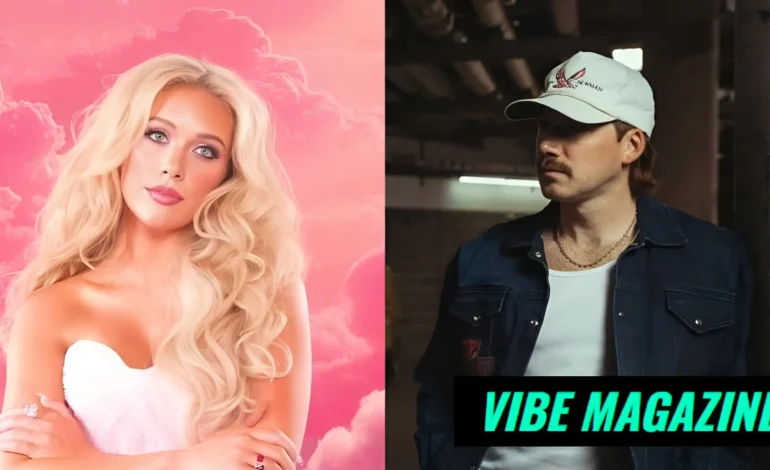

The names Megan Moroney and Morgan Wallen have become closely associated in online country music conversations, where a song lyric, a public appearance, or a passing comment can quickly become the subject of relationship speculation. Both artists have built substantial audiences in contemporary country music, and their careers occupy a musical landscape in which personal experiences, romantic storytelling, and public identity frequently overlap. That combination helps explain why people continue searching for a possible connection between them.
But there is an important distinction between a compelling fan theory and an established personal relationship. Although online discussions have linked the two singers romantically, speculation alone does not establish that they dated, were in a relationship, or shared the experiences sometimes attributed to them. Understanding the story requires looking beyond social media interpretations and considering what each artist has actually made public.
Moroney, known for her sharp songwriting, country-pop sound, and songs about complicated relationships, has developed an identity that combines humor with emotional vulnerability. Wallen, meanwhile, has become one of the most recognizable figures in modern mainstream country music through his distinctive vocal delivery, commercially successful releases, and blend of country, rock, and contemporary influences.
Their careers offer plenty of reasons for listeners to discuss them together. Their audiences overlap, their music frequently addresses romance and heartbreak, and their public profiles invite curiosity about the experiences behind their songs. Yet musical similarities and fan interest should not be confused with proof of a private relationship.
The more revealing story is therefore not simply whether Megan Moroney and Morgan Wallen dated. It is how their names became connected in public conversation, why listeners are interested in their personal lives, and what their individual careers reveal about country music’s increasingly blurred boundaries between storytelling, celebrity, and speculation.
Quick Bio Table
The following table separates established biographical information from details that should not be treated as confirmed.
| Fact | Details |
|---|---|
| Name | Megan Moroney |
| Birth details | October 9, 1997; Georgia, United States |
| Nationality | American |
| Profession | Singer-songwriter |
| Known for | Contemporary country music, relationship-focused songwriting, and songs including “Tennessee Orange” |
| Career timeline | Began gaining wider recognition in the early 2020s; released her debut album, Lucky, in 2023 and Am I Okay? in 2024 |
| Net worth | No independently verified figure established here |
| Marital status | No publicly confirmed marriage established here |
| Spouse | No publicly confirmed spouse established here |
| Children | No publicly confirmed children established here |
| Achievements | Breakthrough success with “Tennessee Orange,” growing national recognition, and critically discussed country releases |
| Name | Morgan Wallen |
| Birth details | May 13, 1993; Sneedville, Tennessee, United States |
| Nationality | American |
| Profession | Singer-songwriter |
| Known for | Mainstream country hits, a recognizable vocal style, and albums including Dangerous: The Double Album and One Thing at a Time |
| Career timeline | Rose to national attention after appearing on The Voice in 2014; released his debut album in 2018 and achieved major commercial success in subsequent years |
| Net worth | No independently verified figure established here |
| Marital status | No publicly confirmed marriage established here |
| Spouse | No publicly confirmed spouse established here |
| Children | One publicly known son, Indigo Wilder Wallen |
| Achievements | Major country chart success, commercially successful albums, and a prominent position in contemporary country music |
| Relationship between the artists | Romantic relationship or dating history should not be presented as confirmed without reliable public evidence |
Note: The table describes publicly established biographical information and avoids assigning a verified financial value or a confirmed romantic history where sufficient evidence has not been established.
Why Megan Moroney and Morgan Wallen Became a Popular Search Topic
Celebrity interest often begins with a question that appears straightforward: Are two famous people dating? In practice, the question can become more complicated when both people are musicians whose work encourages listeners to look for real experiences behind the lyrics.
That dynamic is particularly relevant to Moroney and Wallen. Their musical worlds share an interest in relationships, emotional consequences, attraction, and the tension between public confidence and private uncertainty. Their listeners may hear familiar themes in both catalogs and wonder whether the artists’ personal experiences intersect.
Country music has long encouraged that kind of curiosity. The genre frequently turns ordinary experiences into narratives about love, loyalty, separation, regret, and second chances. Fans may identify with a singer’s words so strongly that they begin wondering who inspired a particular song or whether a lyric refers to a recognizable person.
When artists become popular, this natural curiosity can move from the music into their personal lives. Search engines and social platforms reinforce the process because questions generate further questions. Someone who sees a discussion about Megan Moroney and Morgan Wallen may search for their relationship history, then encounter additional posts interpreting songs, appearances, or interviews through the same lens.
The result can be a cycle in which speculation becomes increasingly visible without becoming more reliable.
The Difference Between Public Interest and Proof
A trending search term does not establish that the event implied by the search actually occurred. Similarly, a large number of social media posts repeating a claim does not automatically turn that claim into verified information.
For Moroney and Wallen, the responsible approach is to distinguish three things: their documented musical careers, their independently established public biographies, and claims about a possible romance. The first two can be discussed through their work and public records. The third requires specific evidence that directly supports the claim.
A photograph, an online theory, a fan-created timeline, or an interpretation of a song may prompt questions. None necessarily proves that two people were dating. Even a genuine friendship or professional connection, if established, would not by itself demonstrate a romantic relationship.
This distinction matters because both singers are real people whose private lives should not be reconstructed from assumptions. It also makes the story more interesting: rather than treating every rumor as a fact, readers can examine why a particular theory attracts attention and what the available information actually establishes.
Megan Moroney: The Songwriter Behind the Conversation
<PRIVATE_PERSON> has developed a recognizable place in modern country music by combining emotionally direct songwriting with a personality that can be playful, self-aware, and occasionally pointed. Her music frequently explores romantic uncertainty, disappointment, attraction, and the process of understanding a relationship after it has changed.
Born in Georgia, Moroney grew up in a musical environment and pursued songwriting as she developed her artistic identity. Her path to wider recognition involved building experience, writing songs, performing, and finding a sound that connected traditional country storytelling with contemporary production.
Her rise illustrates how newer country artists can reach audiences through a combination of recorded music, live performances, online visibility, and songs that become part of wider cultural conversations.
“Tennessee Orange” and the Power of a Relationship Story
One of Moroney’s defining breakthrough songs is “Tennessee Orange.” The track uses a familiar romantic predicament to build a distinctive country narrative: the narrator finds herself emotionally invested in someone associated with a rival college football identity.
The song’s appeal lies in its combination of humor and vulnerability. College colors become more than clothing. They symbolize the small compromises people make when affection draws them into another person’s world. A simple detail becomes evidence of emotional change, creating a story that listeners can understand even if they have never experienced the exact situation.
The song also illustrates a recurring challenge for a songwriter whose work attracts intense personal scrutiny. Listeners often want to identify the real person behind a lyric, especially when the song includes vivid details that appear to point toward a particular individual.
Moroney’s songwriting can encourage those interpretations without requiring every lyric to be read as a literal diary entry. Songs may combine personal memories, imaginative choices, storytelling conventions, and details adjusted to serve the music. Even when a song has a real-life inspiration, that does not automatically establish every theory about the people associated with it.
This is one reason discussions linking Moroney with other country stars can gain momentum. Listeners are already accustomed to examining her lyrics for clues, but an interpretation of a song should not be mistaken for a confirmed account of her dating life.
From Lucky to Am I Okay?
Moroney’s debut album, Lucky, released in 2023, helped establish her as an artist capable of sustaining a broader musical identity beyond a single breakthrough track. Its songwriting explores the contradictions that often accompany romantic experiences: confidence and insecurity, hope and disappointment, and the difficulty of recognizing a relationship’s limits.
Her 2024 album, Am I Okay?, continued that development. Rather than presenting every romantic experience as a simple victory or defeat, the record draws attention to the complicated emotional aftermath of relationships and the process of deciding what to do next.
The album title itself captures a question that resonates with listeners navigating uncertainty. It suggests a narrator who is willing to acknowledge emotional confusion instead of pretending to have everything under control.
That quality is central to Moroney’s appeal. She can present heartbreak without making every song solemn and explore vulnerability without abandoning wit. Her music makes room for conflicting feelings, allowing listeners to recognize their own experiences without requiring the songs to function as exact reports of the singer’s private life.
Her growing profile also means that audiences increasingly interpret her work through the broader story of her career. Each new release can prompt questions about what has changed, what remains unresolved, and whether familiar themes point toward a particular experience.
Those questions are natural in music fandom. The challenge is knowing when interpretation becomes unsupported certainty.
Why Fans Want to Know About Her Dating Life
Relationship questions are especially common for artists whose best-known songs revolve around romance. When a songwriter creates a vivid account of attraction or disappointment, listeners may feel that understanding the person’s real relationships will help them understand the music.
Moroney’s public persona makes that curiosity particularly easy to sustain. Her songs often use specific images, recognizable situations, and conversational language rather than abstract expressions of heartbreak. The result can sound personal even when the precise inspiration is not publicly established.
However, a public-facing musical identity does not mean every aspect of a singer’s personal life is available for interpretation. Nor does a song about an unnamed relationship identify a particular partner.
A careful account of Moroney’s dating life should therefore rely on direct statements or well-established reporting rather than social media theories. Where a relationship has not been reliably confirmed, it is more accurate to say that the available information does not establish it than to fill the gap with speculation.
That approach does not diminish her music. It recognizes that a song can be emotionally truthful without providing a complete factual record of the events that inspired it.
Morgan Wallen: The Artist Behind the Other Half of the Story
Morgan Wallen’s career offers a different but equally important perspective on why his name attracts attention in country music discussions. Where Moroney’s public identity is closely associated with witty, emotionally detailed songwriting, Wallen has become known for a vocal style that blends country influences with rock energy and contemporary popular music.
Born on May 13, 1993, in Sneedville, Tennessee, Wallen initially pursued music through a different route. His appearance on the television competition The Voice in 2014 introduced him to a national audience, giving him an opportunity to develop his career beyond his original regional surroundings. Although the competition did not make him an overnight superstar, it provided an early platform for his musical ambitions.
His subsequent development demonstrates how a televised introduction can become only one chapter in a much longer career. Wallen continued working on his sound, releasing music, and establishing the artistic identity that would eventually bring him considerable commercial success.
How Wallen Built His Place in Country Music
Wallen’s debut studio album, If I Know Me, arrived in 2018. It introduced listeners to an artist whose music combined recognizable country storytelling with modern production and a vocal delivery that could move between tenderness and intensity.
His career expanded substantially with Dangerous: The Double Album, released in 2021. The project helped establish his position among the leading commercial artists in contemporary country music. Its success demonstrated the appeal of a sound that could satisfy traditional country listeners while reaching audiences accustomed to mainstream pop and rock.
In 2023, Wallen released One Thing at a Time, another major chapter in his career. The album reinforced his commercial standing and continued his exploration of relationships, personal consequences, small-town identity, and emotional conflict.
His popularity is important to understanding the attention surrounding his name. When an artist attracts a large audience, even an unverified association with another celebrity can become a significant online topic. Search interest can grow because fans want to understand how two artists might know each other, whether their music intersects, or whether a particular theory has any substance.
However, Wallen’s success does not provide evidence of a romantic connection with Moroney. His career can explain why people are interested in him, but it cannot establish the nature of his personal relationships.
His Public Image and Private Life
Wallen’s public image has developed amid considerable attention to both his musical achievements and his personal controversies. His career has included moments that generated debate well beyond country music, illustrating how a prominent artist’s public conduct can become inseparable from discussions about his work.
That visibility can make the boundary between public information and private speculation especially difficult to maintain. People may feel familiar with a celebrity because they know the songs, have followed the headlines, or have watched interviews. Yet familiarity with an artist’s public persona is not the same as knowledge of that person’s private relationships.
Wallen is also a father. His son, Indigo Wilder Wallen, is part of his publicly known family life. That fact is separate from claims about who he may or may not have dated at different points in his career.
When examining a possible relationship between Wallen and Moroney, these distinctions matter. His family circumstances, public reputation, and musical history provide background, but none should be used to construct a romantic narrative unsupported by reliable information.
The most useful approach is to examine the artists as individuals first, then assess any claims about their connection on their own merits.
Did Megan Moroney and Morgan Wallen Actually Date?
This is the central question behind many searches for the two singers’ names together. The answer requires care because internet discussions can present theories with a level of confidence that exceeds the information supporting them.
A romantic relationship between Moroney and Wallen should not be described as established fact without reliable confirmation. Their names appearing together in online conversations, fan discussions, or speculative interpretations does not independently verify that they dated.
That does not mean every question about their possible connection is unreasonable. Fans naturally wonder about artists who work in the same broad musical environment. They may also be interested in whether songs reflect personal experiences or whether two musicians have interacted professionally.
The important distinction is between asking a question and claiming to know the answer.
Why the Rumor Can Be Difficult to Separate From Reality
Celebrity rumors often develop through a combination of individual observations. Someone notices a lyrical similarity, another person proposes a possible explanation, and others begin repeating the theory. As the discussion spreads, the original uncertainty may become less visible.
Eventually, a question such as whether two singers were romantically involved can be presented in headlines or social posts as though a relationship has already been confirmed.
The process can happen without any single piece of information proving the underlying claim. Repetition creates familiarity, and familiarity can be mistaken for credibility.
Country music provides fertile ground for this pattern because songs are often interpreted as clues to an artist’s personal history. Listeners may search for a name behind a lyric, a relationship behind an album, or a real event behind an emotional performance.
But a theory can sound plausible without being accurate. A song’s narrator is not automatically identical to its songwriter, and a lyrical detail does not necessarily identify a real person.
For the same reason, a possible connection between two musicians should not be inferred from a fan-made timeline unless the events included in that timeline are independently established.
What Would Count as Meaningful Confirmation?
A direct statement from one of the artists, a clearly documented public acknowledgment, or reliable reporting based on verifiable information would provide a stronger basis for describing a relationship.
By contrast, anonymous online claims, unsourced celebrity posts, and interpretations of song lyrics are insufficient on their own.
Even an authentic public interaction would need to be understood in context. Musicians can attend the same events, know people within the same industry, or share professional acquaintances without dating. A photograph or friendly exchange can demonstrate an interaction, but it cannot automatically establish romantic involvement.
The responsible conclusion is therefore limited: public curiosity about Megan Moroney and Morgan Wallen exists, but the existence of that curiosity should not be confused with confirmation of a relationship.
This distinction also protects the integrity of entertainment writing. A compelling article does not need to manufacture certainty. It can explain the question, explore the reasons behind it, and identify the limits of what can responsibly be said.
How Country Music Encourages Relationship Speculation
The discussion surrounding Moroney and Wallen reflects a broader pattern within contemporary country music. Listeners have long treated songs as windows into the lives of the people who create them.
Country songwriting often uses first-person narration, conversational language, and familiar situations. A song might describe a late-night conversation, a complicated breakup, an old relationship, or the moment someone realizes that love has changed their priorities.
These details make the music feel intimate. A listener may recognize the emotions immediately and begin wondering whether the story happened exactly as described.
Yet songwriting is a creative process, not simply a method of recording events. An artist may draw on personal experiences, observations of other people, imagined scenarios, or a combination of different influences. A song can express a genuine emotion without documenting every detail of a real relationship.
The Role of Lyrics in Celebrity Narratives
Listeners often try to connect songs to real people because doing so adds another layer of meaning. A lyric about regret may seem more revealing when a fan believes it refers to a particular breakup. A romantic song may attract additional attention if its narrator appears to resemble someone the artist knows.
This can produce engaging discussions about music, but the interpretation becomes less reliable when speculation is treated as proof.
For example, two artists may sing about similar experiences because heartbreak, attraction, jealousy, and uncertainty are common subjects. Their shared themes do not establish that they experienced those emotions together.
The same principle applies when fans associate a particular song with a celebrity. Unless the artist has identified the inspiration or reliable information establishes the connection, the interpretation remains a possibility rather than a confirmed explanation.
Moroney’s relationship-oriented songwriting and Wallen’s emotionally direct country catalog both invite listeners to connect music with personal experience. That shared characteristic helps explain the interest in their names appearing together, but it does not resolve questions about their private lives.
Social Media Has Changed the Speed of Celebrity Gossip
In earlier eras, entertainment rumors often circulated through magazines, television programs, and informal conversations. Today, a short social media post can introduce a theory to a large audience almost immediately.
Short-form content also encourages simplified explanations. A complicated question may become a caption suggesting that two celebrities are secretly dating, even when the available evidence is ambiguous or absent.
Other users may repeat the claim without knowing where it originated. A discussion can then expand across platforms, giving the impression that independent sources have confirmed the same information when they may all be repeating a single unverified idea.
Algorithms can further amplify emotionally engaging content. Romantic speculation tends to attract attention because it combines familiar human experiences with the appeal of celebrity access. People want to know who is dating whom, whether a breakup occurred, and whether a popular song contains a hidden message.
The resulting attention can be substantial, but popularity is not a substitute for verification.
For readers, the most useful habit is to ask what a claim is actually based on. Is it a direct statement, a clearly documented event, or simply an interpretation that has been repeated many times? That question often reveals the difference between a genuine development and an internet theory.
Comparing Megan Moroney and Morgan Wallen as Artists
Although their names are frequently discussed together, Moroney and Wallen have developed distinct artistic identities. Comparing their work provides a more substantial perspective than concentrating exclusively on speculation about their relationship.
Both artists work within contemporary country music, a genre that has become increasingly flexible in its production and audience reach. Traditional country instruments and storytelling can coexist with rock-influenced arrangements, pop structures, and modern recording techniques.
Within that broad environment, however, artists can approach similar themes in different ways.
Moroney’s Emphasis on Character and Emotional Detail
Moroney’s songwriting often draws its strength from a clearly defined narrator. Her songs may contain humor, frustration, vulnerability, or a sharp observation about the way people behave when emotions complicate their decisions.
Rather than relying exclusively on broad declarations of love or heartbreak, she can build a song around a small detail that reveals something about a relationship. That detail might be a gesture, a familiar setting, a moment of embarrassment, or a decision that seems insignificant until its emotional meaning becomes clear.
This style gives her songs a conversational quality. Listeners can feel that they are hearing someone work through a situation rather than simply delivering a polished statement about it.
Her music also leaves room for contradictions. A narrator can be confident and insecure, amused and hurt, or determined to move on while still thinking about the past. Those tensions make relationship songs feel recognizable because real emotional experiences rarely follow a perfectly orderly sequence.
Wallen’s Blend of Country Storytelling and Mainstream Sound
Wallen’s musical identity operates on a different scale of commercial presentation. His catalog includes country storytelling, rock-influenced energy, and production choices designed to reach a broad contemporary audience.
His vocal delivery is an important part of that identity. Its texture helps distinguish his recordings and contributes to the emotional atmosphere of songs that explore relationships, memory, and personal conflict.
The breadth of his audience also illustrates how country music has expanded beyond a narrowly defined musical category. Listeners may connect with his work through country traditions, contemporary pop influences, or the familiarity of songs about ordinary emotional experiences.
Both artists demonstrate that country music can appeal to listeners through a recognizable voice and a clear emotional perspective, even when their individual approaches differ.
Similar Themes Do Not Mean Shared Experiences
The comparison also highlights a common mistake in celebrity interpretation. When two artists write about similar emotions, fans may look for a shared real-life explanation.
But common subject matter is not evidence of a shared relationship. Country music has always returned to themes such as romantic attraction, betrayal, longing, regret, and reconciliation because these experiences are central to human storytelling.
Two artists can approach the same theme independently, drawing on different experiences and creative choices.
For Moroney and Wallen, their shared place within contemporary country music is a reasonable explanation for why listeners compare them. It is not enough to establish that one artist’s song is about the other or that their music documents a romance.
Their work is worth examining on its own terms, without requiring a personal connection to make the comparison meaningful.
Why Their Individual Careers Matter More Than the Rumors
Relationship speculation can attract immediate attention, but it is only one part of a much larger entertainment story. Moroney and Wallen have careers that deserve examination independently of whether their names appear together in online discussions.
Moroney’s development illustrates the value of distinctive songwriting and a consistent artistic personality. Her movement from early career opportunities to widely recognized releases demonstrates how an emerging artist can build an audience by developing a sound that listeners can identify.
Wallen’s trajectory shows how a televised introduction, continued musical development, and successful albums can lead to an unusually prominent place in mainstream country music. His career also demonstrates the extent to which modern country performers can reach audiences well beyond the genre’s traditional boundaries.
Both trajectories involve more than personal relationships. They reflect decisions about music, recording, performance, public image, and the connection between an artist and an audience.
The Business of Being a Public Figure
As artists become more recognizable, the public becomes interested in more aspects of their lives. Listeners who initially discover a song may eventually follow interviews, concert appearances, career developments, and personal announcements.
That interest can help musicians build dedicated audiences. At the same time, it can create pressure to explain or disclose aspects of their lives that have little connection to their professional work.
Romantic speculation is one manifestation of that pressure. A singer’s work may be analyzed for hidden meanings, while unrelated interactions can become the basis for elaborate theories.
For artists, the boundary between public performance and private experience can be difficult to maintain. For audiences, recognizing that boundary is part of engaging responsibly with celebrity culture.
A musician can write convincingly about heartbreak without providing an explanation of every relationship. An artist can share selected personal experiences while keeping other parts of life private.
Moroney and Wallen do not need to have a confirmed romantic history for their careers to be interesting. Their different musical paths already offer a meaningful comparison of contemporary country music and the ways artists develop their identities.
What Readers Should Know About Their Relationship Status
When evaluating the question of whether Megan Moroney and Morgan Wallen are together, it helps to separate the subject into several distinct issues.
First, both singers have established careers and public identities. Their music and professional achievements can be discussed independently of their personal lives.
Second, online curiosity about a possible relationship is real as a feature of their public reception. People may encounter posts, videos, and discussions that present interpretations of their connection.
Third, the existence of those discussions does not establish that they dated. Without reliable confirmation, a romantic relationship should remain an unverified claim rather than a factual element of either artist’s biography.
Finally, current relationship status is not something that should be inferred from old rumors. Personal circumstances can change, and an absence of public confirmation does not justify inventing an explanation.
This is particularly important when articles are updated or republished over time. A statement that was once accurate may become outdated, while an unsupported rumor can persist online long after its original context has disappeared.
A responsible entertainment feature should avoid claiming that either artist is secretly involved with the other, that a specific song confirms their relationship, or that they have privately disclosed details that cannot be established.
The clearest answer is also the fairest: the relationship speculation surrounding their names should not be presented as confirmed dating history.
Frequently Asked Questions
1. Did Megan Moroney and Morgan Wallen date?
A romantic relationship between Megan Moroney and Morgan Wallen should not be treated as confirmed without reliable public evidence. Online discussions and fan theories do not independently establish that the singers dated.
2. Why are Megan Moroney and Morgan Wallen mentioned together?
Their names appear together in country music discussions and relationship speculation. Their overlapping musical audience and the interest in the personal stories behind country songs help explain the curiosity, but that interest is not proof of a romance.
3. Is Megan Moroney’s song “Tennessee Orange” about Morgan Wallen?
The song is known for its story about romantic attraction complicated by a rival college football identity. It should not be used as proof of a relationship with Wallen unless a reliable, direct confirmation establishes that specific connection.
4. How old is Megan Moroney?
Megan Moroney was born on October 9, 1997. She is an American country singer-songwriter who gained wider recognition in the early 2020s.
5. How old is Morgan Wallen?
Morgan Wallen was born on May 13, 1993, in Sneedville, Tennessee. He is an American singer-songwriter known for commercially successful contemporary country music.
6. Does Morgan Wallen have children?
Yes. Wallen has one publicly known son, Indigo Wilder Wallen. His role as a father is separate from speculation about his possible relationships with other artists.
7. What are Megan Moroney’s most notable albums?
Her notable releases include Lucky (2023) and Am I Okay? (2024). These projects helped establish her identity as a contemporary country artist with a strong focus on emotionally detailed songwriting.
8. What are Morgan Wallen’s best-known albums?
His major albums include If I Know Me (2018), Dangerous: The Double Album (2021), and One Thing at a Time (2023). These releases played important roles in his rise to mainstream country music prominence.
Conclusion: A Story About Music, Curiosity, and the Limits of Celebrity Gossip
The interest in Megan Moroney and Morgan Wallen reveals something about the way audiences experience contemporary country music. Listeners do not simply hear songs; they search for the emotions, memories, and experiences that might have shaped them. When artists write convincingly about relationships, it is natural for fans to wonder whether those stories connect to recognizable people.
Moroney’s ability to combine humor with emotional honesty and Wallen’s success in blending country storytelling with mainstream musical influences make both artists compelling subjects in their own right. Their careers also show how quickly public interest can extend from music into questions about private relationships.
But curiosity does not eliminate the need for evidence. A popular theory is still a theory, a lyrical interpretation is not automatically a factual account, and repeated speculation does not establish a romantic history.
The most meaningful way to understand the discussion surrounding Megan Moroney and Morgan Wallen is to recognize both sides of the story: why audiences are interested in a possible connection and why that interest should not be mistaken for confirmation.
Their individual careers provide plenty to explore, from Moroney’s growing reputation as a songwriter to Wallen’s position within mainstream country music. Those achievements remain significant regardless of what fans speculate about their personal lives.
Ultimately, the distinction between a song’s emotional truth and a celebrity rumor’s factual truth is worth preserving. It allows listeners to enjoy the music, discuss its possible meanings, and remain curious without turning uncertainty into an unsupported claim.
For More Visits: Vibemmagazine