


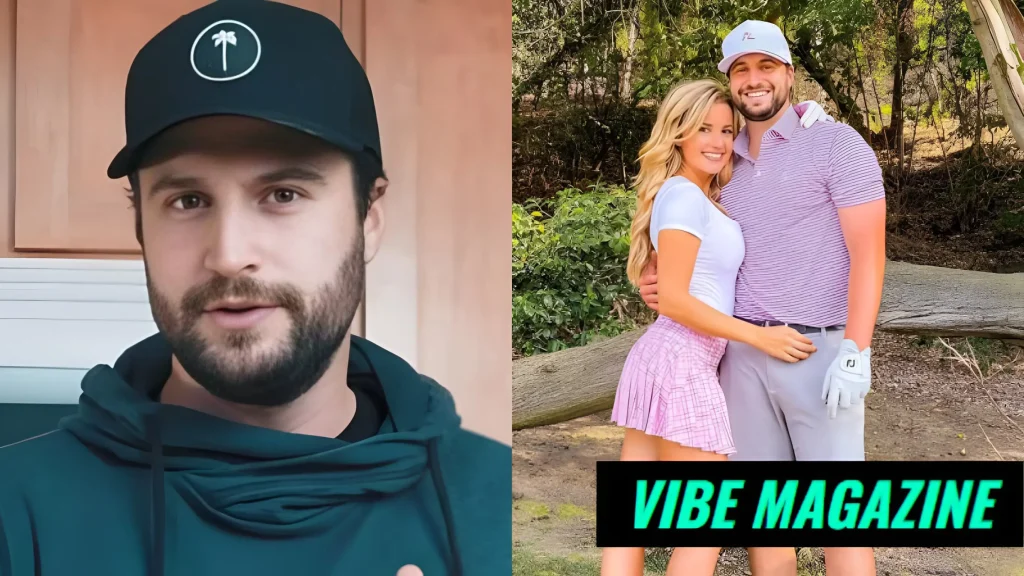
Robby Berger’s financial story is interesting because it does not begin with a professional golf career, a television contract, or a traditional sports-media job. It begins much more quietly: with a hospitality job, an Instagram account, a sense of humor, and an instinct for making people pay attention.
Before millions of viewers knew him as Bobby Fairways, Berger was working in guest services at the Four Seasons Beverly Hills. He had an online personality built around comedy, sports, everyday observations and the deliberately ridiculous world of “Brilliantly Dumb.” Eventually, that side project became something much larger. Berger moved into full-time digital media, developed the Bobby Fairways character, helped build Bob Does Sports and became one of the recognizable personalities in YouTube golf.
That makes the question of robby berger net worth more complicated than simply searching for a dollar figure. His career sits inside a modern creator-business model involving video, podcasts, advertising, sponsorships, merchandise, events and brand partnerships. Some of those activities generate revenue for businesses and media properties rather than directly becoming Berger’s personal income or wealth.
A 2023 profile by GOLF described the scale of that transition, including Berger’s earlier Four Seasons career, the growth of Bob Does Sports, the Breezy Golf apparel brand, sponsorships and other revenue streams. The same profile makes the larger point clear: Berger did not simply become a golfer who happened to make videos. He became the personality at the center of a growing entertainment business.
Robby Berger at a Glance
| FactDetails | |
|---|---|
| Full Name | Robby Berger; some online databases have also used James Robert Berger, but Robby Berger is the name consistently used in major public coverage |
| Popular Name | Bobby Fairways, the on-screen golf persona associated with Bob Does Sports |
| Date of Birth | March 8, 1992 is widely reported by biographical databases, although a primary-source confirmation of the exact date is not readily established |
| Place of Birth | Randolph, New Jersey, United States, according to public biographical and career coverage |
| Nationality | American |
| Profession | Digital creator, comedian, podcast host, golf-entertainment personality and media entrepreneur |
| Known For | Bob Does Sports, Bobby Fairways and the earlier Brilliantly Dumb comedy/content identity |
| Years Active | Primarily active as a digital creator since the 2010s, with Bob Does Sports beginning in 2021 |
| Net Worth | No officially confirmed personal figure; online estimates vary substantially and should be treated as speculative rather than verified wealth |
| Marital Status | No current marital status has been reliably established through authoritative public reporting |
| Spouse | No currently confirmed spouse has been established through reliable public sources |
| Children | No reliable public source establishes a confirmed number of children |
| Notable Work | Bob Does Sports, The Brilliantly Dumb Show, Bobby Fairways and Breezy Golf |
| Major Brand/Projects | Bob Does Sports, Breezy Golf, The Brilliantly Dumb media identity and collaborations involving golf entertainment |
The distinction between confirmed information and online estimates matters throughout Berger’s story. His public career is unusually visible, but his private finances are not. That is why a precise-looking number should not automatically be mistaken for a verified one.
Who Is Robby Berger?
The easiest way to understand Robby Berger is to separate the person from the characters and brands that made him famous.
Robby Berger is the creator and personality behind Bobby Fairways, the nickname that became closely connected with Bob Does Sports. He is also associated with The Brilliantly Dumb Show and the broader Brilliantly Dumb identity that preceded his golf-focused success.
His public image is not built around being the strongest golfer in the room. In fact, that would miss the point. Berger’s appeal comes from personality, humor, competitiveness, friendship and the willingness to show the frustrations of an ordinary golfer rather than pretending every shot belongs on a professional highlight reel.
GOLF’s 2023 profile noted that Berger grew up in New Jersey, was a strong athlete and pitched in college. It also described how relatively new he was to golf compared with the amount of attention he eventually generated around the sport.
That contrast became important.
Golf already had professional stars. What Berger brought was something different: the perspective of the entertaining amateur, surrounded by friends, personalities and increasingly recognizable guests.
His contribution to golf entertainment therefore has less to do with technical instruction and more to do with turning a round of golf into a story.
The Years Before Bob Does Sports
Long before Bobby Fairways became recognizable on YouTube, Berger was learning how to work with people.
His professional life included a position at the Four Seasons Beverly Hills. According to GOLF, he began with overnight work at the hotel’s front desk and eventually became a Guest Services Manager overseeing roughly 50 employees.
That experience may seem unrelated to internet entertainment, but it helps explain an important part of Berger’s later career.
Hospitality is built around reading people.
A hotel employee has to understand when someone wants conversation and when they do not. They have to solve problems, communicate quickly and make strangers feel comfortable. For a future content creator, those are surprisingly transferable skills.
Berger also had something else developing at the same time: an online voice.
His Brilliantly Dumb identity allowed him to make jokes, observations and sports-related content outside the restrictions of his day job. GOLF described the early account as a place where Berger riffed on subjects ranging from hangovers and breakfast sandwiches to sports bets and everyday life.
At first, there was no obvious reason to believe that this would become a serious media career.
That is what makes the eventual transition so interesting.
Finding a Voice Through Comedy and Content
Berger’s early online work was not built around a carefully packaged golf persona.
The Brilliantly Dumb concept was broader. Comedy came first. Sports were part of the conversation, but the identity was ultimately about Berger’s ability to turn ordinary observations into entertaining content.
That gave him an important advantage later.
When Bob Does Sports arrived, viewers were not simply watching someone learn how to play golf. They were watching an established personality bring his existing comedic instincts into a new environment.
The internet had already taught Berger how to communicate directly with an audience.
He knew that a short joke could become a post, that a recurring character could become recognizable and that a personality could sometimes be more valuable than production polish.
The eventual business would become much bigger than a social-media account, but the underlying principle remained remarkably simple: people were following Berger because they wanted to spend time in his world.
That is an important distinction in understanding robby berger net worth. The value of his career cannot be reduced to how many views a particular video receives. The more significant development was the creation of a recognizable personality that could travel across different formats.
How Bobby Fairways Became a Recognizable Persona
“Bobby Fairways” works because the name feels bigger than the golfer.
The persona is confident, funny and occasionally frustrated, but it is also deliberately relatable. Berger does not have to pretend that he is a tour-level player. His golf struggles can actually become part of the entertainment.
That became one of the defining characteristics of Bob Does Sports.
A professional golfer can build an audience through extraordinary performance. Berger could build one through the opposite dynamic: viewers could watch the journey of someone trying to become better while surrounded by friends who made the experience entertaining.
GOLF’s profile captured that contrast when Berger described himself as having been a disaster when he started and still struggling despite his progress.
The joke works because there is genuine effort underneath it.
Bobby Fairways is not simply a fictional character pasted onto a golf channel. It is a heightened version of Berger’s personality, built around his love of sports, humor and the social side of golf.
The Beginning of Bob Does Sports
Bob Does Sports was launched in 2021 through Berger’s partnership with Doing Things Media. Public descriptions of the brand identify Berger as the creator and frontman, with Joe Demare, better known as Joey Cold Cuts, and Nick Stubbe, better known as Fat Perez, becoming central members of the on-screen group.
The original idea was broader than the golf channel that eventually emerged.
Berger had envisioned personality-driven sports content rather than immediately building a dedicated golf universe. But golf proved to be the format where the chemistry clicked.
That change was significant.
Instead of trying to compete directly with instructional golf channels, Bob Does Sports leaned into entertainment. The golf course became a stage. The match became a storyline. The players became characters.
And because the cast had different personalities, each round could develop naturally.
Joey Cold Cuts brought his own energy and emotional reactions. Fat Perez provided a contrasting presence through his stronger golf ability and dry humor. Berger remained the central host who could move between the personalities and keep the story moving.
The format was simple enough to understand but flexible enough to support everything from ordinary rounds to celebrity appearances and larger competitions.
Why Golf Became the Center of the Brand
Berger did not need to be the best golfer in the room.
That may actually have helped.
Traditional golf media often places extraordinary players at the center of the story. Bob Does Sports reversed that emphasis. The question was not always whether someone could shoot the lowest score. It was whether the round would be entertaining.
That opened the door to a much broader audience.
Someone who had never watched a full professional golf tournament could still understand a rivalry between friends. Someone who did not care about swing mechanics could still enjoy an argument over a missed putt. Someone who rarely played golf could recognize the feeling of hitting a bad shot and immediately wanting another chance.
The result was a style of golf entertainment that relied heavily on personality.
GOLF reported that multiple Bob Does Sports videos reached audiences in the millions during the early rise of the channel, including episodes involving Joey Cold Cuts, Fat Perez and professional athletes.
The numbers mattered, but the more important development was the format’s repeatability.
One successful video could be followed by another match, another guest, another challenge and another storyline.
That is how a personality channel begins to resemble a media property.
The People Who Helped Shape the Show
Although Berger is the central name in the story, Bob Does Sports was never simply a one-person operation.
Joey Cold Cuts became one of the most recognizable members of the group. His chemistry with Berger helped create the conversational, unpredictable quality that distinguished the videos from conventional golf programming.
Then came Fat Perez.
Perez changed the balance of the group because his golf ability created a natural contrast with Berger and Joey. Instead of three people performing identical roles, the show developed complementary personalities.
That difference is one reason the format could sustain longer videos.
The audience was not watching only golf. It was watching relationships.
The crew’s chemistry also made guests more important. Professional athletes and well-known figures could enter the existing world of Bob Does Sports without requiring the entire format to change.
That flexibility became commercially useful as the audience grew.
The Bob Does Sports podcast extended the same personalities into another medium. Apple Podcasts identifies Berger, Joe Demare and Fat Perez among the show’s hosts, demonstrating how the brand expanded beyond YouTube video.
Where Robby Berger’s Income Comes From
This is where the financial story becomes more complicated.
Berger has publicly discussed several revenue streams over the years. In GOLF’s 2023 profile, he described income from Cameo, the YouTube channel, podcasting, Breezy apparel and brand sponsorships.
Cameo was particularly revealing because it showed how a recognizable personality could monetize direct access to fans. Berger told GOLF that he charged $95 per video at the time, with higher pricing for last-minute requests, and said he could complete roughly 20 to 30 videos a day during busy periods.
That is documented historical information, not a current earnings statement.
It also should not be used to calculate his present-day net worth. Rates, demand, platform fees, taxes and the amount of time spent on the service can all change.
YouTube represents another layer.
A channel with a large audience can potentially generate advertising income, but public view counts do not reveal the exact amount earned. Advertising rates vary by audience, geography, video length, season, advertiser demand and other factors. A video receiving millions of views does not mean its creator personally receives a predictable amount of money.
Sponsorships add another variable.
Brands can pay for integrations, campaigns, appearances or partnerships, but the terms of private contracts are generally not public. Even when a sponsorship is visible to viewers, the fee may remain confidential.
That is why adding up visible brand activity and calling the result Robby Berger’s income would be misleading.
Understanding the Robby Berger Net Worth Question
The most important point about robby berger net worth is that there is no authoritative public figure that can be presented as his confirmed personal net worth.
Various websites publish estimates, with numbers ranging from a few million dollars to substantially higher amounts. One 2026 estimate, for example, places Berger in a $3 million-to-$6 million range while explicitly acknowledging that the calculation is an inference rather than a verified financial disclosure. Other websites publish figures considerably above or below that range without providing documentation strong enough to establish an official personal balance sheet.
Those numbers should therefore be treated as estimates.
A net worth calculation normally involves assets minus liabilities. For a private creator, outsiders generally do not know the complete list of assets, debts, investments, private-company interests, tax obligations or ownership arrangements.
That makes precise figures especially difficult.
A creator may have a successful company without personally owning all of it. A brand may generate substantial revenue while spending heavily on production, staff, marketing, inventory and operations. Sponsorship income may be split among multiple parties. A media company can also have investors or partners.
All of those factors make the difference between business activity and personal wealth extremely important.
Revenue Is Not Net Worth
Suppose a media brand generates a large amount of revenue.
That does not mean the founder personally receives the same amount.
Revenue can pay for employees, travel, production, equipment, insurance, offices, advertising, merchandise manufacturing, fulfillment, professional services and taxes. What remains after expenses is not automatically personal income, either.
Then there is ownership.
If a creator works with a media company, the creator may have a contractual arrangement that does not resemble straightforward ownership. Without the underlying agreements, outsiders cannot responsibly assign a percentage and multiply it by a guessed company valuation.
That is why a headline claiming a creator is “worth” a certain amount should always be treated cautiously unless the number comes from a documented disclosure or credible financial reporting.
Why Online Estimates Differ
Different websites use different assumptions.
One may look at YouTube views. Another may estimate advertising income. Another may include merchandise. Another may assume an ownership percentage in a business. Some may simply repeat a number that appeared elsewhere.
Once an estimate is copied several times, it can begin to look established even though the original figure was speculative.
That is particularly relevant to Berger because his business model contains multiple layers.
Bob Does Sports is a media brand. Breezy Golf is an apparel and accessories business. The podcast is another distribution channel. Sponsorships create another revenue stream. Personal appearances and creator platforms add others.
Without private financial statements, there is no responsible way to combine all of those activities into one exact personal number.
For that reason, the safest current description is that Robby Berger has built a commercially successful creator career, but his personal net worth has not been publicly confirmed.
Sponsorships, Advertising and Brand Partnerships
Sponsorships have been a visible part of Bob Does Sports from relatively early in its growth.
GOLF’s 2023 profile mentioned brands including SeatGeek and Callaway in connection with the show. More recent Bob Does Sports programming continues to feature commercial partnerships and sponsored segments, illustrating how established the advertising side of the channel has become.
For creators, sponsorships can be more important than ordinary platform advertising because they connect audience attention directly to a brand.
But sponsorship value is not necessarily the same as personal income.
The channel may have production expenses. Multiple people may participate in the commercial relationship. A campaign can cover an entire group or brand rather than one individual.
This is another reason why public sponsorship visibility cannot establish Berger’s personal wealth.
The commercial significance is nevertheless clear: companies are willing to associate themselves with the Bob Does Sports audience because the brand has become large enough to function as a recognizable media property.
Merchandise and Business Ventures
Merchandise represents another step in the evolution from creator to brand.
Breezy Golf emerged in 2022 through the Bob Does Sports team and Doing Things Media. The brand has been associated with Berger, Fat Perez and Joey Cold Cuts and sells golf apparel and accessories.
The importance of Breezy is not just that fans can purchase clothing.
Merchandise allows a media audience to become a customer base.
A YouTube viewer watches a video for free. A podcast listener consumes another piece of content without necessarily paying the creators directly. Merchandise creates a separate commercial relationship.
The recognizable “Have A Day” identity is particularly suited to that model because it works beyond one specific video.
GOLF also reported Berger’s involvement in Breezy tournaments and a Five Iron Golf partnership, showing how the brand could extend into physical experiences rather than remaining purely digital.
The wider lesson is that successful creators increasingly build businesses around their personalities rather than depending on a single platform.
The Business Behind a Golf Entertainment Brand
A mature creator brand requires much more than turning on a camera.
There are producers, editors, scheduling, travel, partnerships, merchandise logistics, social-media management, sales, accounting and business development.
The public usually sees the finished video.
They do not see the work happening before and after it.
Bob Does Sports has grown into a production ecosystem capable of filming long-form golf matches, traveling to courses, working with guests and producing episodes at a frequency that requires organizational support.
That infrastructure is part of what separates a creator hobby from a media business.
Doing Things Media played an important role in that transition. GOLF reported that the company provided infrastructure that helped support areas such as apparel and events.
This matters when thinking about Berger’s financial position.
The existence of a large business ecosystem does not prove that Berger personally owns all of it. But it does demonstrate that his career has developed beyond individual content creation.
From Brilliantly Dumb to a Full Media Operation
There is a straight line between Brilliantly Dumb and Bob Does Sports, even though the subject matter changed.
The earlier identity gave Berger an audience and a recognizable comedic voice.
Bob Does Sports gave that voice a setting.
Golf supplied competition, recognizable locations, natural conflict, recurring characters and an enormous library of possible storylines.
The result was not merely a successful YouTube channel. It was a repeatable entertainment format.
That distinction is crucial.
A creator can become popular because of one viral clip. A media brand becomes valuable when audiences return repeatedly because they know what kind of experience they are going to receive.
Bob Does Sports developed that repeat behavior.
Viewers came back for the personalities as much as the golf.
Robby Berger’s Approach to Content
Berger’s approach is built around personality before perfection.
That philosophy explains why a bad shot can be just as valuable as a great one.
The central tension is not always “Can Bobby play professional-level golf?” It is “Can Bobby finally improve, win this challenge or survive whatever ridiculous situation the group has created?”
That gives the audience a reason to care.
GOLF described Berger as someone who had become a symbol of a more accessible side of modern golf, emphasizing the idea that enjoyment and personality can matter as much as score.
It is also why the content feels different from traditional instructional programming.
Nobody needs to pretend that every mistake is a lesson.
Sometimes a mistake is simply funny.
Sometimes the argument afterward is the best part.
Sometimes the guest matters more than the final score.
That flexibility gives Bob Does Sports room to operate as entertainment rather than instruction.
His Influence on Modern Golf Entertainment
The rise of Berger and Bob Does Sports happened alongside a broader transformation in golf media.
YouTube has made it possible for creators to build audiences around personality-driven formats that would have been difficult to fit into television.
Golf is particularly suitable for this model.
A single round can provide hours of footage. Courses offer changing scenery. Competition creates natural stakes. Celebrities can participate without needing to become golfers themselves. Friends can become recurring characters.
Bob Does Sports has taken advantage of almost all of those ingredients.
The brand has also participated in larger creator-golf events. In 2025, the Internet Invitational brought together dozens of golf personalities in a competition associated with Barstool Sports and Bob Does Sports, with Berger among the captains.
The significance of that development is bigger than one tournament.
It shows how creator golf has become substantial enough to produce events with their own narratives, teams, audiences and commercial identities.
Berger’s career sits directly inside that transition.
What His Career Says About the Creator Economy
Robby Berger’s career is an example of a new kind of professional trajectory.
There was no obvious ladder from hotel employee to golf-media entrepreneur.
He created the ladder himself.
The first step was building an audience. The second was developing recognizable personalities and formats. The third was finding business partners and infrastructure. The fourth was turning audience attention into multiple forms of revenue.
That sequence is increasingly common among successful creators.
The creator economy rewards people who can do more than attract views. They need to build trust, establish recurring formats and create reasons for audiences to remain engaged.
Berger’s career demonstrates how that can happen.
The hotel background matters because it shows that his most valuable skill was not necessarily a technical media credential.
It was communication.
The comedy background mattered because it gave him a voice.
The golf content mattered because it provided a scalable entertainment format.
And the business partnerships mattered because they turned the audience into a broader commercial operation.
What Could Shape His Financial Future
The future value of Berger’s career is difficult to predict, but several structural factors will matter.
The first is audience loyalty.
A large audience is valuable, but a loyal audience can be even more useful because it supports repeated videos, merchandise, sponsorships and live experiences.
The second is diversification.
Bob Does Sports is no longer dependent on one format. There is video, podcasting, merchandise, partnerships and event-related activity.
The third is brand durability.
A creator’s popularity can rise quickly and fall just as quickly. A recognizable brand has a better chance of surviving changes in individual platforms.
The fourth is ownership.
This is the factor outsiders know the least about.
Future financial outcomes could depend heavily on the ownership and contractual arrangements behind the businesses associated with Berger. Without those documents, it is impossible to calculate what percentage of any business value should be attributed to him personally.
That uncertainty should remain part of any responsible discussion of robby berger net worth.
Robby Berger Before Bob Does Sports: What Was He Doing?
Before Bob Does Sports, Berger worked at the Four Seasons Beverly Hills and developed the Brilliantly Dumb social-media identity. GOLF reported that he progressed from overnight front-desk work into a Guest Services Manager role before ultimately leaving hospitality to pursue his growing media career.
That earlier career is important because it demonstrates that Bob Does Sports was not his first experience communicating with an audience. He had already developed an online following and a comedic identity before golf became the main focus.
Is Robby Berger a Professional Golfer?
No evidence establishes Berger as a professional touring golfer. His public identity is that of a creator and amateur golfer.
His golf journey is actually central to the appeal of Bobby Fairways. He learned and improved publicly rather than arriving with the résumé of a professional player.
That makes his content different from golf media built around elite competitive credentials.
The story is about the experience of playing golf, improving, competing and having fun with friends.
What Is Bob Does Sports?
Bob Does Sports is a golf-focused digital entertainment brand created around Robby Berger and a recurring group of personalities including Joey Cold Cuts and Fat Perez.
The channel began in 2021 and developed into a major YouTube golf property, with its programming extending into podcasts, merchandise, brand partnerships and larger creator-golf events.
Its format is based less on formal instruction and more on personality-driven golf entertainment.
Is Bobby Fairways the Same Person as Robby Berger?
Yes.
Bobby Fairways is Robby Berger’s well-known on-screen nickname and persona.
The name became closely associated with Berger through Bob Does Sports, where he appears as the central host and personality.
The distinction is mainly between the real person and the entertainment identity built around him.
How Does Robby Berger Make Money?
Public reporting has identified several historical and ongoing categories of income associated with Berger’s creator career, including YouTube content, sponsorships, podcasting, merchandise, Cameo and other brand-related activities. GOLF documented several of those revenue streams in its 2023 profile.
However, the exact amount Berger personally earns from each source is not publicly established.
It would therefore be inaccurate to add estimated YouTube revenue, merchandise sales and sponsorship values together and call the result his personal income.
Is Robby Berger’s Net Worth Publicly Confirmed?
No.
There is no authoritative public disclosure establishing an exact personal net-worth figure for Berger.
Several websites publish estimates, but those figures rely on assumptions that cannot be independently verified from public financial statements. Some estimates differ by millions of dollars.
The most responsible description is therefore that Berger has built a substantial creator and media business, while his exact personal net worth remains undisclosed.
What Businesses Are Connected to Bob Does Sports?
Bob Does Sports is the central media property. The wider ecosystem has included Breezy Golf, podcasting, sponsorships, merchandise and event-related projects.
Doing Things Media partnered with Berger to create Bob Does Sports, and the same broader relationship helped support the development of Breezy Golf.
The precise ownership structure and financial division between the individual creators and associated companies should not be assumed without documentation.
Why Do Robby Berger Net Worth Estimates Vary?
They vary because private financial information is not available in the same way it is for publicly traded companies or individuals who disclose their wealth.
Some websites estimate income from views. Others add sponsorships, merchandise, brand value or assumed business ownership.
Those calculations can produce dramatically different results.
A business can also generate millions in revenue without its founder personally receiving millions in profit. Expenses, taxes, partners, employees and ownership structures all affect the final number.
How Did Robby Berger Become Famous?
His rise began before Bob Does Sports through the Brilliantly Dumb identity and his social-media comedy.
The golf brand then gave his personality a highly repeatable format.
As Bob Does Sports expanded, videos featuring Berger, Joey Cold Cuts, Fat Perez and various guests attracted increasingly large audiences. GOLF documented several early videos that reached millions of viewers.
His fame therefore came from a combination of comedy, personality, sports culture and consistent digital publishing rather than one conventional breakthrough.
What Makes Bobby Fairways Different From Traditional Golf Personalities?
Traditional golf personalities are often known primarily for their playing ability, tournament results or instructional expertise.
Berger’s appeal is different.
He is an entertainer who happens to play golf, rather than a professional golfer who happens to make entertainment content.
That difference allows him to connect with viewers who may not identify with elite competitive golf.
His mistakes, rivalries, jokes and friendships are part of the product.
What Was the Biggest Turning Point in His Career?
One major turning point came when Berger chose to commit to his own media career rather than accept a traditional opportunity with Barstool Sports.
GOLF reported that Dave Portnoy had offered Berger a job paying roughly $65,000 to move to New York, but Berger declined because of the relocation and the life he had built in Los Angeles.
In hindsight, that decision became an important part of the story.
Instead of becoming an employee within an established sports-media company, Berger continued building his own creator-led operation.
The Bigger Meaning Behind Robby Berger’s Financial Story
The most interesting thing about Berger’s finances may ultimately be that there is no single number that tells the whole story.
A traditional celebrity biography might ask how much money a person earned from a television show or sports contract.
Berger’s career does not fit that structure.
His value has developed through an interconnected system of content, audience, personality and business.
The YouTube channel creates attention.
The podcast extends the relationship.
Sponsorships monetize the audience.
Merchandise turns fans into customers.
Events create physical experiences.
Recurring personalities create familiarity.
And brands such as Breezy Golf provide something that can exist independently of a single video.
That is a much more complicated financial machine than a simple salary.
It is also why the exact robby berger net worth figure is less important than understanding how the business was constructed.
The Difference Between Being a Creator and Building a Media Business
Robby Berger’s career began with content.
It did not end there.
That distinction is what makes his story worth following.
A creator can post videos without building a business around them. Berger moved in the other direction. His work developed into a recognizable brand, a recurring cast, a merchandise operation, a podcast, sponsorship relationships and participation in larger golf-media projects.
The journey from Four Seasons employee to Bobby Fairways illustrates how much the definition of a media career has changed.
There was a time when a person interested in sports entertainment generally needed a television network, newspaper, radio station or production company.
Berger’s career shows another route.
He built an audience first.
The business followed.
That does not make every estimate about his wealth accurate. It does not justify assigning him ownership of every company connected with Bob Does Sports. And it does not make business revenue equivalent to personal net worth.
What it does show is that Berger created something commercially meaningful from a personality that initially lived on the side of his conventional career.
Final Thoughts
Robby Berger’s rise as Bobby Fairways is ultimately less about a mysterious net-worth number and more about the transformation of a personal voice into a recognizable media business.
He started with hospitality work and an online comedy identity. Golf entered the picture at a time when creator-led sports entertainment was beginning to expand rapidly. What followed was Bob Does Sports: a show built around friends, competition, humor and the idea that golf does not always have to take itself seriously.
The business grew alongside the audience.
Breezy Golf gave the brand a retail dimension. Podcasting created another way to spend time with the personalities. Sponsorships connected the audience with commercial partners. Larger golf events demonstrated that the brand could operate beyond ordinary YouTube episodes.
That history explains why the financial question attracts so much attention.
There are clearly multiple commercial pieces surrounding Berger’s career. But the public does not have access to a complete personal balance sheet, private ownership agreements or verified records of his assets and liabilities. As a result, specific online net-worth figures should remain estimates rather than facts.
The more revealing measure of Berger’s success is the structure he helped build.
He did not become successful because he was the world’s best golfer. He became successful because he understood entertainment, developed a recognizable personality and turned the social experience around golf into something people wanted to watch repeatedly.
That is the real story behind Robby Berger’s financial rise: not a single number, but the gradual conversion of personality into audience, audience into brand, and brand into a modern media business.
For More Visits: Vibemagazine


