

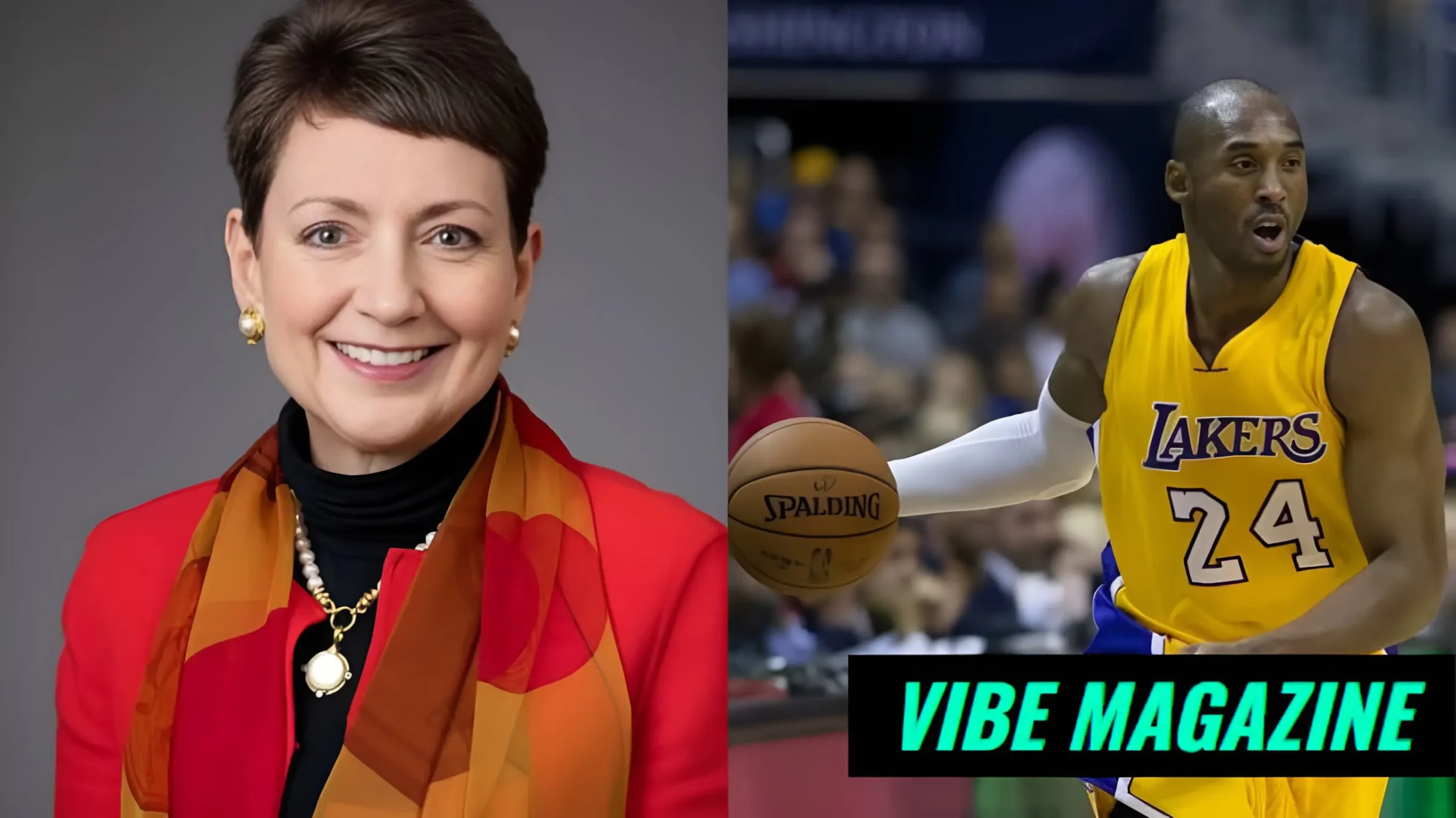


Kobe Bryant and Lynn Good: Their Stories

Some names immediately belong to a particular world. Kobe Bryant evokes basketball arenas, championship banners, competitive intensity, and one of the most recognizable sporting careers of his generation. Lynn Good brings to mind corporate leadership, energy infrastructure, business strategy, and the executive world of a major American utility company.
Put those two names together—Kobe Bryant and Lynn Good—and the contrast is striking.
One built a global identity through professional sport and later expanded into storytelling, entrepreneurship, and creative work. The other developed her reputation through accounting, finance, corporate management, and leadership in the energy sector. Their careers unfolded in different environments, served different professional purposes, and attracted attention for very different reasons.
That makes the pairing interesting without requiring a dramatic connection between the two.
There is no established public basis for describing Bryant and Good as relatives, close friends, business partners, colleagues, or romantic partners. Their names appearing together should therefore not be treated as evidence that they shared a personal or professional relationship. Instead, the more useful question is what their individual careers tell us about two highly visible forms of achievement.
Bryant became a global sports figure whose influence extended beyond his playing career. Good became one of the most recognizable female executives in the American energy industry. Their biographies show how public influence can develop in worlds as different as professional basketball and corporate leadership.
Quick Bio Table
| Fact | Details |
|---|---|
| Full Name | Kobe Bean Bryant |
| Date of Birth | August 23, 1978 |
| Place of Birth | Philadelphia, Pennsylvania, United States |
| Nationality | American |
| Profession | Professional basketball player, entrepreneur, investor, filmmaker, and author |
| Education | Lower Merion High School |
| Known For | 20-year NBA career with the Los Angeles Lakers |
| Major Career Role | Shooting guard for the Los Angeles Lakers |
| Years Active | 1996–2016 as an NBA player |
| Major Achievements | Five-time NBA champion, NBA Most Valuable Player, 18-time NBA All-Star, two-time Olympic gold medalist |
| Marital Status | Married |
| Spouse | Vanessa Bryant |
| Children | Four daughters |
| Net Worth | No definitive independently verified figure; frequently reported estimates vary |
| Full Name | Lynn Joy Good |
| Date of Birth | 1960 |
| Place of Birth | Ohio, United States |
| Nationality | American |
| Profession | Business executive |
| Education | University of Texas at Austin |
| Known For | Leadership of Duke Energy |
| Major Career Role | Chair and CEO of Duke Energy |
| Years Active | More than three decades in business and corporate leadership |
| Major Achievements | Long executive career in the energy sector and leadership of one of the largest electric power holding companies in the United States |
| Marital Status | Married |
| Spouse | Bob Good |
| Children | Two daughters |
| Net Worth | Public estimates vary and are not treated here as a definitive figure |
Why the Pairing Stands Out
The first thing that makes Kobe Bryant and Lynn Good unusual as a search pairing is the lack of an obvious shared industry.
Bryant’s professional life was built around basketball. He entered the NBA directly after high school, became the central figure of the Los Angeles Lakers for two decades, and developed into an international sports celebrity.
Good’s career followed a more conventional corporate path. Her professional background was rooted in accounting and finance before she moved through positions of increasing responsibility within the energy industry. She eventually became the chief executive of Duke Energy.
Their paths illustrate two different ways public recognition can develop.
Athletes often become famous through performance that takes place in front of enormous audiences. Executives generally become known through the companies they lead, the industries they represent, and the business decisions associated with their positions.
Bryant’s achievements could be measured in championships, points, All-Star selections, Olympic medals, and individual honors. Good’s professional record is understood through leadership positions, corporate strategy, financial management, energy operations, and long-term executive responsibility.
The contrast makes the comparison worthwhile, but it does not create a relationship that the facts do not support.
Kobe Bryant’s Rise Began on the Basketball Court
Kobe Bryant was born in Philadelphia in 1978 into a basketball family.
His father, Joe Bryant, played professional basketball in the NBA and overseas. Kobe spent part of his childhood in Italy while his father continued his basketball career there, and the experience exposed him to basketball in a different cultural environment from the one in which he would eventually become famous.
When Bryant returned to the United States, his basketball ability was already attracting attention.
He attended Lower Merion High School in Pennsylvania and became one of the most prominent high school basketball players in the country. Rather than attending college, Bryant entered the NBA draft in 1996.
The decision was significant.
He was selected by the Charlotte Hornets with the 13th overall pick and was subsequently traded to the Los Angeles Lakers. At 18, he became one of the youngest players to enter the NBA at the time.
The Lakers would become the only NBA organization Bryant ever played for.
That single-team identity became an important part of his public image.
Two Decades With the Lakers
Bryant’s NBA career lasted from 1996 to 2016.
Twenty seasons with the same franchise gave him an unusually long relationship with one organization. During that time, the Lakers moved through multiple eras, coaches, teammates, playoff runs, rebuilding periods, and championship campaigns.
Bryant experienced both success and setbacks.
He won five NBA championships with the Lakers. His championship teams included the late-1990s and early-2000s Lakers alongside Shaquille O’Neal, followed by championship teams in 2009 and 2010.
His individual résumé grew alongside those team accomplishments.
Bryant became an 18-time NBA All-Star and won the NBA Most Valuable Player award in 2008. He also earned two Olympic gold medals with the United States men’s basketball team, winning at the 2008 Beijing Olympics and the 2012 London Olympics.
Those accomplishments established him as one of the defining players of his era.
Yet statistics and awards tell only part of the story.
Bryant’s identity became strongly connected with preparation, competitiveness, shot-making, and an intense approach to the game. His career was marked by an enormous number of high-pressure performances, particularly during the postseason.
The Meaning of the Lakers Years
Bryant’s connection with the Lakers became larger than the ordinary relationship between an athlete and a team.
The franchise already had an extraordinary basketball history before he arrived, but Bryant eventually became one of its defining modern-era players.
He played alongside some of the most recognizable basketball figures of his generation and competed against many of the league’s strongest teams.
His career also crossed generations.
When he entered the league, Michael Jordan was still active. By the time Bryant retired, a new generation of stars had already taken center stage.
That longevity helped him become familiar to basketball audiences around the world.
For younger fans, Bryant was not simply one star among many. For a large part of his career, he was one of the faces most closely associated with the NBA itself.
Bryant’s Competitive Identity
One of the defining features of Kobe Bryant’s public identity was his approach to competition.
He became known for an intense commitment to practice and preparation and for a willingness to take difficult shots in important moments.
The nickname “Black Mamba” became closely associated with his playing identity during the later stages of his career.
That persona reflected a deliberate separation between Bryant the athlete and Bryant the private individual.
It became part of the broader mythology surrounding his career, particularly as he moved toward the final years of his playing days.
His approach also influenced how younger athletes discussed training and preparation.
Even after his retirement, Bryant continued to speak and write about discipline, practice, creativity, and the process of improving at a craft.
The 81-Point Game and Other Defining Moments
Among Bryant’s most memorable individual performances was his 81-point game against the Toronto Raptors in January 2006.
The performance became one of the most extraordinary single-game scoring achievements in NBA history.
It also reflected the type of offensive responsibility Bryant carried during that period of his career.
Other moments became important for different reasons.
His 60-point performance in his final NBA game in 2016 provided an unusual ending to a professional career. Rather than leaving the court quietly, Bryant produced one final major scoring performance before retirement.
That night became one of the defining images of his final season.
His career therefore contained a collection of moments that remained recognizable even to people who did not closely follow every NBA season.
Bryant After Basketball
Retirement did not mean the end of Kobe Bryant’s professional ambitions.
In fact, some of his most interesting work came after basketball.
Bryant became increasingly involved in storytelling, filmmaking, business, youth sports, and creative projects.
His production company, Granity Studios, focused on stories connected to sports, competition, creativity, and personal development.
One of the company’s most notable projects was Dear Basketball, an animated short based on Bryant’s retirement poem.
The film won the Academy Award for Best Animated Short Film in 2018.
That achievement demonstrated that Bryant’s interests extended beyond the conventional activities associated with retired athletes.
He was no longer competing on a basketball court, but he was still interested in competition and excellence—this time through creative work.
A Different Kind of Athlete-Entrepreneur
Bryant also became active in investing.
Through Kobe Inc., he participated in business ventures, including an investment in BodyArmor, the sports drink company.
The investment became particularly notable after Coca-Cola later acquired a stake in the company and subsequently completed its acquisition.
Bryant’s business activities demonstrated a broader approach to life after professional sport.
Rather than treating retirement as the end of his competitive identity, he appeared interested in transferring the habits and perspectives developed through athletics into business and creative projects.
This is one reason the phrase Kobe Bryant career cannot be limited to his NBA statistics.
His playing career established his fame, but his post-basketball work expanded the range of his public identity.
The Final Chapter of Bryant’s Life
Kobe Bryant died on January 26, 2020, in a helicopter crash in Calabasas, California.
His daughter Gianna and seven other people also died in the crash.
The news prompted an enormous international response because Bryant remained such a recognizable figure years after his playing career had ended.
His death also changed the way his career was discussed.
Instead of being viewed solely through the lens of basketball statistics and championships, his life increasingly came to be remembered through his family, creative projects, business interests, youth basketball work, and the broader cultural influence associated with his name.
His posthumous legacy has continued through the work of his family, the Kobe and Vanessa Bryant Foundation, and other initiatives associated with his career and family.
Lynn Good Entered a Very Different Professional World
Lynn Good’s professional story begins far from an NBA arena.
Born in Ohio in 1960, she studied at the University of Texas at Austin, where she earned degrees in finance and accounting.
Her background in accounting became an important foundation for a career that eventually moved into senior management.
Unlike Bryant, whose public career became visible at a very young age, Good’s professional rise occurred gradually.
She built experience over years of work in the energy sector, developing expertise in finance and corporate operations before reaching executive leadership.
Her career eventually led to Duke Energy.
That company would become the organization most closely associated with her name.
The Road to Duke Energy
Good joined Duke Energy after working in the energy industry for years.
She held senior positions involving finance and business operations and eventually became chief financial officer.
Her experience in finance proved particularly relevant to the challenges of the energy industry.
Electric utilities operate businesses that require substantial infrastructure investment. Power generation, transmission, distribution networks, environmental requirements, fuel costs, technology, regulatory decisions, and customer demand all influence how utilities operate.
Corporate leadership in such an environment requires long-term planning.
Good’s financial background provided a foundation for navigating these issues.
She eventually became CEO of Duke Energy in 2013.
That appointment marked a major stage in her professional career and established her as one of the most prominent executives in the American energy sector.
Lynn Good and the Energy Industry
The phrase Lynn Good career is inseparable from the development of modern utility businesses.
Duke Energy is involved in electricity generation and distribution across multiple regions of the United States.
As CEO, Good has been responsible for a company operating in an industry where business decisions intersect with infrastructure, regulation, technology, environmental policy, and customer needs.
Energy companies also face unusually long planning horizons.
A power plant, transmission project, or major grid investment can take years to plan and build and can remain part of the energy system for decades.
This makes capital allocation particularly important.
An executive cannot focus exclusively on the next quarter. Large infrastructure decisions require consideration of future demand, regulatory expectations, technology changes, and financial conditions.
Good’s leadership career developed within that environment.
The Responsibilities of Leading Duke Energy
Being CEO of a major utility involves responsibilities that are largely invisible to ordinary consumers.
When a customer turns on a light, the process behind that action involves generation facilities, transmission networks, local distribution systems, maintenance teams, engineers, technology systems, regulators, and numerous other functions.
A chief executive does not personally operate those systems.
Instead, the role involves setting direction, overseeing senior management, communicating with stakeholders, allocating resources, and making decisions about the company’s long-term position.
For Good, that has meant operating at the intersection of business and infrastructure.
Her public profile has consequently been very different from Bryant’s.
Bryant was regularly visible on television because basketball itself is a spectator sport.
Good’s work has generally attracted attention through corporate announcements, financial discussions, energy policy, infrastructure projects, and executive leadership.
A Career Shaped by Corporate Responsibility
Good’s rise is notable partly because it represents a different route to leadership.
She began in accounting and finance.
From there, she accumulated experience in the energy industry.
She moved into senior financial roles.
Eventually, she became chief executive.
That progression reflects a career in which specialized expertise developed into broader organizational responsibility.
Her leadership has also made her a prominent voice among American business executives.
She has participated in discussions concerning energy transition, infrastructure, electricity demand, technology, and the future of the power system.
These subjects have become increasingly important as the United States considers how to balance reliability, affordability, environmental concerns, industrial growth, and new sources of electricity demand.
Two Public Figures, Two Forms of Influence
The contrast between Bryant and Good becomes clearest when considering how their professional influence operated.
Bryant’s influence was highly visible.
Every game created a public performance. Every season produced statistics. Every playoff series generated headlines. His success could be watched by millions of people.
Good’s influence is more institutional.
Her decisions affect a large company and the infrastructure it operates. The consequences of those decisions can involve employees, customers, investors, regulators, communities, and long-term capital projects.
The two forms of influence should not be measured using the same standard.
A basketball player’s impact can be reflected in championships, records, cultural recognition, and inspiration.
A corporate leader’s impact can be reflected in organizational performance, strategic decisions, infrastructure investment, and institutional leadership.
They operate in different systems.
Is There a Documented Connection Between Kobe Bryant and Lynn Good?
The central question behind the keyword deserves a straightforward answer.
There is no established public evidence that Kobe Bryant and Lynn Good had a significant personal or professional relationship.
They were associated with different industries and developed their public careers independently.
Bryant’s professional identity centered on the Los Angeles Lakers, basketball, entertainment, creative work, and entrepreneurship.
Good’s professional identity centered on Duke Energy, finance, corporate governance, and the energy industry.
There is no established basis for describing them as business partners, relatives, colleagues, or close personal associates.
That distinction matters because the presence of two names in a search query does not establish that the individuals knew each other.
A search phrase can reflect curiosity, an online association, or content that happens to mention both people.
It should not be transformed into a relationship without evidence.
Why Their Names May Appear in the Same Search
There is no single verified explanation for why an individual reader might search Kobe Bryant and Lynn Good together.
The two names belong to prominent Americans whose careers have been documented extensively online.
Search systems, business websites, biography pages, databases, and articles can place unrelated public figures into the same digital environment.
The names may also be used in discussions involving leadership, wealth, public recognition, business careers, or famous personalities.
But these possibilities are different from a verified connection.
The most useful interpretation is therefore comparative rather than relational.
Looking at Bryant and Good side by side allows readers to see how two people from entirely different professional worlds developed recognizable public identities.
What Their Careers Have in Common
Despite the enormous differences between their professions, several broad similarities emerge.
Both built careers over many years.
Both developed specialized expertise before becoming widely recognized.
Both eventually became associated with organizations that carried significant public visibility.
Both were required to perform under pressure.
For Bryant, pressure arrived through competition, expectations, injuries, playoff games, and the demands of professional sport.
For Good, pressure comes through corporate responsibility, financial decisions, infrastructure challenges, regulatory environments, and expectations from numerous stakeholders.
Both careers also demonstrate that public recognition often follows sustained performance rather than a single event.
Bryant’s fame was built through two decades of basketball.
Good’s reputation developed through decades of professional and executive experience.
Their Educational Paths Tell Different Stories
The difference begins even before their most famous professional roles.
Bryant entered professional basketball directly from high school.
His education was closely intertwined with athletic development because his basketball ability had already placed him on an NBA path while he was a teenager.
Good followed a traditional university and professional route.
She studied finance and accounting at the University of Texas at Austin and then built her career through the energy industry.
These contrasting educational experiences reflect the different requirements of their professions.
Professional athletes can enter their industries unusually young because athletic performance develops on a different timetable.
Corporate executives generally accumulate experience over many years before taking responsibility for large organizations.
Bryant’s Legacy Is More Than Statistics
The easiest way to describe Kobe Bryant is through numbers.
Five championships.
Eighteen All-Star selections.
One MVP award.
Two Olympic gold medals.
Twenty NBA seasons.
An 81-point game.
But the public memory of Bryant extends beyond statistics.
His work after basketball introduced him to audiences interested in filmmaking, storytelling, business, and youth development.
His creative projects showed a willingness to approach unfamiliar fields with the same seriousness that had characterized his sporting career.
That transition became an important part of the later Kobe Bryant biography.
He was no longer simply an athlete.
He became a creator and entrepreneur whose professional identity continued to evolve.
Good’s Legacy Is Tied to Leadership
For Lynn Good, the defining feature of her career is leadership within the energy industry.
She did not become famous through a single spectacular moment.
Her public profile developed through years of corporate experience and eventually through leading Duke Energy.
That distinction explains why the two figures can appear so different even though both have achieved substantial recognition.
Bryant’s career was built around moments.
Good’s career is built around sustained organizational responsibility.
One involved a visible contest between teams and players.
The other involves decisions about companies, infrastructure, capital, employees, customers, and long-term strategy.
Public Attention Works Differently for Them
The media environment surrounding the two figures has also been fundamentally different.
Bryant lived in the world of sports media.
Games were broadcast internationally. His performances were analyzed immediately. Fans followed his statistics, interviews, injuries, rivalries, and championship campaigns.
Good operates within business media.
Her appearances and statements tend to be associated with corporate earnings, energy policy, infrastructure, leadership, and industry developments.
That difference shapes public perception.
An athlete can become famous among people who know very little about the business of sports.
A corporate executive may be highly influential within an industry while remaining unfamiliar to people outside it.
Good’s recognition is therefore strongest in business and energy circles, while Bryant’s reached virtually every corner of popular sports culture.
Their Personal Lives Should Not Be Used to Create a False Connection
There is also no reason to manufacture a personal story between the two simply because their names are being searched together.
Bryant was married to Vanessa Bryant, and they had four daughters.
Lynn Good is married to Bob Good and has two daughters.
These facts belong to two separate biographies.
They do not provide evidence of a connection between the families.
When discussing recognizable public figures, personal information should be handled carefully. A biography becomes less reliable when unrelated family details are used to construct a narrative that the evidence does not support.
The professional records of both Bryant and Good are substantial enough to stand on their own.
What the Pairing Teaches About Public Profiles
The phrase Kobe Bryant and Lynn Good offers an unusual reminder that fame is not one-dimensional.
Bryant’s fame came from entertainment and athletic competition.
Good’s recognition came from corporate leadership.
One was watched while performing.
The other was followed through the organization she led.
One communicated with fans and audiences.
The other communicated with investors, employees, customers, regulators, and industry stakeholders.
Yet both became recognizable names because their work placed them in positions where performance mattered at a large scale.
That is where the comparison becomes meaningful.
Frequently Asked Questions
Who was Kobe Bryant?
Kobe Bryant was an American professional basketball player who spent his entire 20-year NBA career with the Los Angeles Lakers. He became a five-time NBA champion, an 18-time All-Star, the 2008 NBA MVP, and a two-time Olympic gold medalist. After retiring, he pursued filmmaking, storytelling, business, and other creative projects.
Who is Lynn Good?
Lynn Good is an American corporate executive best known for her leadership at Duke Energy. Her professional background is rooted in finance and accounting, and she built a long career in the energy industry before becoming chief executive of Duke Energy.
Why are Kobe Bryant and Lynn Good mentioned together?
There is no single established personal or professional connection that explains the pairing. Their names may appear together because of online search associations or content involving prominent American figures. The documented biographies of the two people show separate careers in basketball and energy.
Did Kobe Bryant and Lynn Good work together?
There is no established public evidence showing that Bryant and Good worked together in a significant professional capacity. Bryant’s career centered on basketball, entertainment, and entrepreneurship, while Good’s career centered on corporate leadership and the energy industry.
Were Kobe Bryant and Lynn Good friends or relatives?
There is no established public evidence identifying them as relatives or close personal friends. Their publicly documented biographies do not present them as members of the same family or as significant personal associates.
What was Kobe Bryant best known for?
Bryant was best known for his two decades with the Los Angeles Lakers, five NBA championships, elite scoring ability, competitive approach, and status as one of the most recognizable basketball players of his generation. His later work in filmmaking and business also became an important part of his legacy.
What is Lynn Good best known for?
Good is best known for her executive leadership at Duke Energy. She developed a career in finance and the energy industry before becoming CEO, making her a prominent figure in American corporate and utility leadership.
What industries were Kobe Bryant and Lynn Good associated with?
Bryant was primarily associated with professional basketball, sports, entertainment, filmmaking, and business ventures. Good is primarily associated with energy, utilities, finance, corporate management, and executive leadership.
What were Kobe Bryant’s major career achievements?
Among Bryant’s major achievements were five NBA championships, the NBA Most Valuable Player award in 2008, 18 All-Star selections, two Olympic gold medals, and numerous All-NBA selections. His post-playing career also included an Academy Award for Dear Basketball.
What are Lynn Good’s major professional achievements?
Good’s major professional achievement is her rise from a finance and accounting background to the chief executive leadership of Duke Energy. Her career has included senior financial and operational responsibilities within the energy industry and long-term leadership of a major American utility company.
Did Kobe Bryant have a career after basketball?
Yes. After retiring from the NBA in 2016, Bryant became involved in storytelling, filmmaking, entrepreneurship, investing, and youth sports. His company Granity Studios produced projects focused on sports and creative storytelling, including Dear Basketball, which won an Academy Award.
Is Lynn Good a basketball executive?
No. Lynn Good’s professional career is associated with the energy industry and corporate leadership, particularly Duke Energy. She is not known for holding a basketball executive position.
Is there evidence that Kobe Bryant invested with Lynn Good?
There is no established public evidence that Bryant and Good were investment partners. Bryant had his own documented business and investment activities, while Good’s career has primarily involved corporate executive leadership.
Two Legacies That Do Not Need the Same Explanation
The phrase Kobe Bryant and Lynn Good initially seems to demand an explanation. Why would a legendary basketball player and a major energy executive appear in the same search?
The available information does not point to a major personal relationship between them.
Instead, the answer lies in the unusual way modern public figures can be grouped together.
Bryant represents athletic achievement at an extraordinary level. His career was built through the NBA, where his performances were watched by millions of people and measured through championships, awards, statistics, and memorable moments. His post-basketball work added filmmaking, entrepreneurship, and creative storytelling to that identity.
Good represents a very different kind of professional achievement. Her career developed through accounting, finance, energy, and corporate management before she reached the highest leadership position at Duke Energy.
Their industries are different.
Their daily responsibilities were different.
Their routes to recognition were different.
And there is no established basis for turning the pairing into a personal story.
The Real Value of Comparing Their Stories
What makes the two biographies worth examining together is not a hidden connection but the contrast.
Kobe Bryant’s career demonstrates how an individual can become a global figure through exceptional performance in a highly visible profession and then expand that identity into creative and business work.
Lynn Good’s career demonstrates how expertise accumulated over decades can lead to leadership of a major organization operating in one of the country’s most essential industries.
One career unfolded in stadiums and arenas.
The other unfolded in offices, boardrooms, utility operations, and the broader energy sector.
One was followed through scores and highlights.
The other is followed through corporate decisions and industry developments.
Both stories are distinctly their own.
That is the clearest way to understand the unusual pairing of Kobe Bryant and Lynn Good. The two names do not need an invented relationship to be interesting. Their separate careers already provide two very different perspectives on achievement, leadership, public recognition, and professional legacy.
For More Visits: Vibemagazine